At our company, we frequently hear from homeowners and property managers who want to know exactly how long their powder-coated surfaces will hold up before needing attention. Powder coating has earned a strong reputation for durability, but the real answer depends on several key variables. In this detailed guide, we dive deep into the lifespan of powder coating, the factors that influence it, and practical steps you can take to maximize performance. Whether you’re considering powder coating for ornamental iron fences, railings, gates, automotive parts, or architectural elements, understanding these details helps you make an informed, confident decision.
We believe in providing transparent, experience-based insights so you can invest wisely and enjoy beautiful, protected surfaces for years to come.
The Expected Lifespan of Powder Coating
Powder coating typically lasts 10 to 20 years under normal outdoor conditions, with many high-quality applications exceeding 20 years when properly applied and maintained. In milder indoor or sheltered environments, the finish can remain pristine for even longer—often 30 years or more. This impressive longevity stems from the unique application process: electrostatically charged powder is cured at high temperatures to form a thick, cross-linked polymer layer that bonds chemically to the substrate.
Unlike traditional liquid paints that may begin fading or peeling within 3 to 6 years, powder coating creates a robust barrier. We have seen well-executed projects on exterior metalwork retain excellent color and gloss after two decades of sun, rain, and temperature fluctuations. However, “lasting” means different things to different people—some prioritize color retention, others focus on corrosion protection, and many want zero maintenance. Our goal is always to set realistic expectations based on your specific situation.
Super-durable polyester powders formulated for architectural use often deliver the best outdoor performance. In accelerated testing, these can withstand the equivalent of 15–25 years of real-world exposure with minimal degradation. That said, no coating is immortal, and understanding the variables helps predict and extend real-world results.
Key Factors That Affect Powder Coating Lifespan
Several interconnected elements determine how long your powder coating will truly last. We always evaluate these during project consultations to deliver tailored recommendations.
Surface Preparation and Pretreatment Quality
Proper preparation is perhaps the single most important factor. We cannot overstate the value of thorough cleaning and profiling. Abrasive blasting removes contaminants and creates an anchor pattern that promotes strong adhesion. Without it, even the best powder can fail prematurely due to under-film corrosion or delamination.
Chemical pretreatments, such as zinc phosphate or zirconium-based conversion coatings, add another layer of protection. For steel and iron substrates, a zinc-rich primer beneath the topcoat dramatically improves corrosion resistance. In our experience, projects that skip rigorous prep see noticeable wear 5–8 years earlier than those done correctly.
Environmental Exposure and Climate Conditions
Where the coated item lives plays a huge role. Coastal areas with salt spray, industrial zones with pollutants, or regions with extreme UV intensity and frequent freeze-thaw cycles accelerate wear. In harsh marine environments, a standard powder coating might need attention after 8–12 years, while the same finish in a temperate suburban setting can easily reach 20+ years.
UV radiation causes chalking and fading over time, though modern super-durable formulas resist this effectively. High humidity promotes moisture ingress if micro-damage occurs, and abrasive wind-blown sand can create surface wear. We recommend assessing your local climate carefully—clients in Florida or coastal California often opt for enhanced marine-grade systems.
Coating Thickness, Type, and Application Quality
Thicker films generally perform better. Standard powder coating achieves 2–4 mils, but we often apply 4–6 mils or more for demanding applications. The powder type matters immensely: polyester excels outdoors for color and gloss retention, while epoxies offer superior chemical resistance but may chalk faster in direct sunlight. Hybrid and fluoropolymer options provide premium performance for extreme conditions.
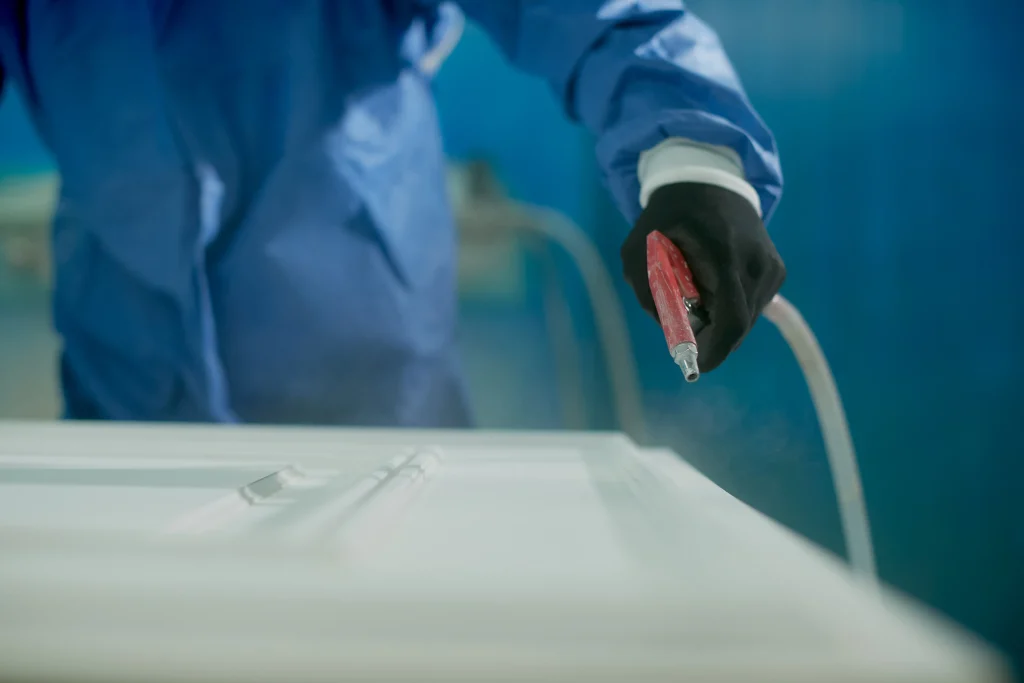
Application expertise is non-negotiable. Even coverage, correct curing temperatures, and proper oven dwell times ensure full cross-linking. Poor curing leads to under-cured areas that fail early. We use calibrated equipment and follow manufacturer specifications precisely to avoid these issues.
Substrate Material and Design Considerations
The base metal influences outcomes. Galvanized steel or aluminum generally performs better than raw mild steel. Ornamental iron with intricate details requires careful attention to edges and recesses, where the Faraday cage effect can cause thinner coverage. Sharp edges and welds need extra care during preparation.
Complex designs may experience differential expansion and contraction, stressing the coating. We advise clients on design modifications or thicker builds where longevity is paramount.
Maintenance Practices and Usage Patterns
Even the toughest coating benefits from care. Regular gentle cleaning removes abrasive dirt, bird droppings, and salt that can degrade the surface over time. Neglect in high-traffic areas—such as handrails or gates—leads to mechanical wear and chips that allow corrosion to start.
High-abrasion environments or frequent impacts shorten lifespan. Touching up minor damage promptly prevents small problems from becoming major ones.
Real-World Performance and Case Studies
In our projects, powder-coated ornamental iron fences in suburban neighborhoods routinely look excellent after 15 years with only occasional washing. One commercial railing installation near a busy highway, using a duplex system of galvanizing plus powder, shows minimal wear after 18 years despite heavy de-icing salt exposure.
Automotive and architectural applications tell similar stories. Properly powder-coated wheels or building facades maintain vibrant appearance far longer than painted counterparts. These outcomes reinforce our confidence in recommending powder coating when done right.
Duplex systems—combining hot-dip galvanizing with powder topcoats—often achieve 30–50+ years of service in challenging conditions, offering the best of both sacrificial and barrier protection.
How to Maximize the Lifespan of Your Powder Coating
We share these proven strategies with every client to ensure optimal results:
- Choose the right system for your environment from the start.
- Work with experienced applicators who prioritize preparation.
- Opt for high-performance powders and adequate film thickness.
- Implement a simple maintenance routine: clean 2–4 times per year with mild soap and water.
- Inspect annually for chips or scratches and address them quickly.
- Consider clear protective topcoats or waxes in extreme exposures.
Proper installation also matters—avoid damaging the coating during handling or mounting.
Comparing Powder Coating Lifespan to Other Finishes
When stacked against liquid paint, powder coating wins decisively in longevity and low maintenance. Paint often requires repainting every 3–7 years, accumulating significant costs and labor. Anodizing on aluminum or galvanizing alone provides excellent protection but lacks the color versatility and uniform aesthetics of powder.
For ultimate durability, we sometimes suggest combinations, but standalone high-quality powder coating satisfies the vast majority of residential and light commercial needs beautifully.
Choosing a Professional Partner for Long-Lasting Results
Selecting the right team makes all the difference. We focus on quality at every stage, from material selection to final inspection. Our transacted clients appreciate the peace of mind that comes with finishes engineered to last. Whether your project involves new fabrication or recoating existing pieces, we deliver solutions tailored to your timeline and budget.
Frequently Asked Questions

How long does powder coating last on outdoor metal like fences and railings? In average conditions, expect 10–20 years of excellent performance. Harsh environments may reduce this to 8–15 years, while premium systems and good care push it well beyond 20 years.
Can powder coating be repaired if damaged? Small chips can be touched up with specialized products, but larger damage often requires professional stripping and recoating for a seamless match. Early intervention prevents underlying corrosion.
Is powder coating worth the investment for longevity? Absolutely. The higher initial cost is offset by dramatically reduced maintenance and superior appearance retention over decades. Most clients find it pays for itself within 5–8 years compared to repeated painting.
Conclusion
Powder coating offers one of the most reliable and attractive finishes available today, with a lifespan that routinely reaches 10–20 years or more when the right factors align. By understanding what affects durability—preparation, environment, materials, application, and maintenance—you can make choices that deliver lasting value and beauty.
Join our social networks to stay updated with our latest news and events. Don’t miss out on anything and follow our accounts today! Contact us!