Table of Contents
How do you prepare outdoor metal structures for winter in North Carolina?
Preparing outdoor metal structures for winter in North Carolina comes down to four tasks: inspect the coating, clean off dirt and salt residue, repair exposed metal, and clear drainage points. Do it in fall, before the first freezing rain or sleet. That way small chips don’t turn into corrosion problems by spring.
Some structures need more than a touch-up: those with widespread peeling, rust under the finish, or a coating that keeps failing usually need and recoating. Request a quote early in the season. Richards Powdercoat responds to quote requests within 24 business hours and discusses the production timeline openly before you commit.
Key takeaways
- Fall is the window: inspect before the first freeze, not after it.
- Corrosion usually starts at chips, cut edges, and fasteners, where bare steel shows.
- Powder coating applied over clean, phosphate-pretreated steel forms a continuous barrier against moisture and corrosion (Powder Coating Institute).
- A new coat of powder won’t strengthen corroded steel; rust must be fully removed before recoating.
- Richards Powdercoat answers quote requests within 24 business hours.
Planning a recoating project before winter?
See Richards Powdercoat’s industrial and architectural powder coating services in Dunn, NC.
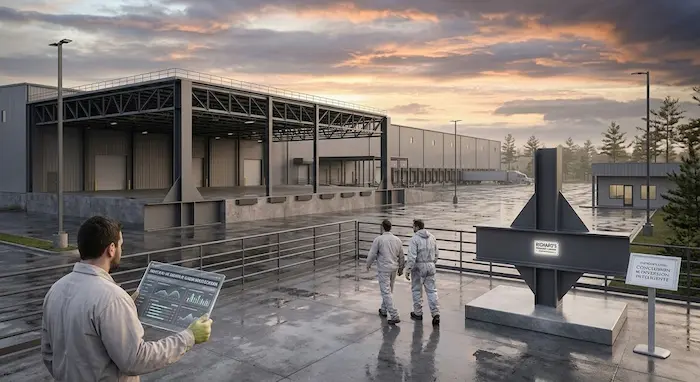
Why does winter weather threaten outdoor metal structures in North Carolina?
Winter in North Carolina is hard on coated metal because moisture gets into every chip and gap, then freezes, thaws, and mixes with road salt. The risk depends on location. Mountain sites see longer freezes. The Piedmont gets ice storms and freeze-thaw swings. Coastal sites deal with salt air year-round.
The North Carolina State Climate Office tracks these regional winter patterns. A canopy in Boone and a railing in Wilmington face different conditions, so they need different maintenance plans.
Powder coating protects steel only while the film is intact. Once water reaches bare metal through a scratch or a gap around a bolt, freezing can widen the damage. Deicing salts then speed up the rust.
Check these areas first:
- Scratches, chips, and visible bare metal.
- Rust staining, blistering, peeling, or flaking.
- Joints, seams, fasteners, and field-cut edges.
- Low points where water collects or can’t drain.
- Lower sections hit by road spray or standing water.
What should a pre-winter inspection of metal structures include?
A pre-winter inspection should cover six points: the coating surface, exposed metal, edges and fasteners, joints and seams, drainage, and the surrounding exposure. On commercial properties, an early-fall inspection leaves time to schedule repairs before winter operations start.
The checklist applies to railings, gates, canopies, structural members, equipment housings, and other coated assemblies.
| Inspection point | What to look for | Next step |
| Coating surface | Chips, scratches, peeling, blistering | Photograph and mark damaged areas |
| Exposed metal | Bare steel, rust spots, staining | Decide between cleaning, repair, or recoating |
| Edges and fasteners | Damaged coating at holes, bolts, cut edges | Inspect up close; plan compatible protection |
| Joints and seams | Trapped moisture, failed sealant, gaps | Fix sealing and drainage |
| Drainage | Blocked outlets, debris, standing water | Clear obstructions |
| Surroundings | Road salt, chemicals, nearby water | Adjust maintenance to the exposure |
Log the date, the location of each defect, and what was done. Fall photos give you a baseline to compare against in spring.
How do you protect powder-coated steel from moisture and corrosion?
Powder-coated steel stays protected as long as the coating stays intact. Before winter, keep it clean, find any breaks in the film, and deal with them before water reaches the steel. Washing won’t fix a failed coating, but it does show you where the coating has failed.
- Wash the surface with mild detergent, water, and a soft cloth or brush. Rinse and let it dry.
- Re-inspect the clean surface, since dirt hides scratches and rust stains.
- Photograph every chip, bare spot, and peeling area.
- Check whether the damage stops at the finish or reaches the metal.
- Choose a repair method that follows the coating manufacturer’s guidance.
- Fix whatever lets water collect, starting with blocked drains.
Never apply new powder coating over rust, grease, or an unsuitable old finish. According to the Powder Coating Institute, adhesion depends on a clean substrate, proper pretreatment, and correct curing. For steel with rust or mill scale, the industry references SSPC-SP 6 (commercial blast cleaning) or SSPC-SP 3 (power tool cleaning), depending on how much contamination is present.
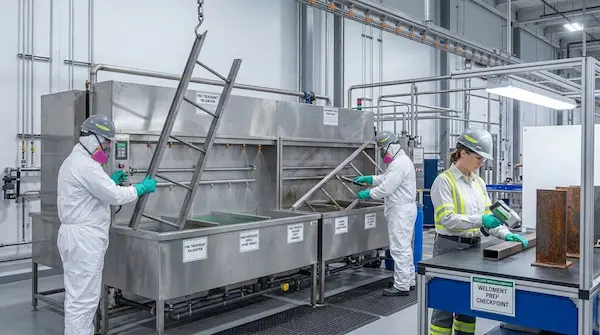
At Richards Powdercoat, surface preparation and pretreatment include chemical cleaning and degreasing, a phosphate conversion coating, rinsing, drying, and masking of functional surfaces. Parts with heavy mill scale, rust, or weld spatter may need mechanical blasting, so mention it when you request a quote.
When should you touch up a coating and when should you recoat?
A touch-up works for small, isolated damage. Widespread peeling, rust spreading under the finish, or repeated coating failure usually means the part needs stripping and recoating. The deciding factors are the condition of the metal and how far the damage has spread.
- Isolated scratches: an approved touch-up system may be enough.
- Bare metal with surface rust: clean it, remove the rust, then pick a suitable repair system.
- Widespread peeling or poor adhesion: find the cause before specifying a new coating.
- Rust at joints or fasteners: look for trapped moisture beneath the surface.
- Bent members or section loss: have a qualified professional check the structure first.
A new coat of powder will not strengthen corroded steel. If corrosion has weakened a component, it needs repair or replacement before any refinishing.
How long does powder coating take before winter?
Richards Powdercoat responds to quote requests within 24 business hours. Production time depends on order size, part complexity, and the current schedule. The lead time is discussed openly before you commit to the order, so you know whether your winter deadline is realistic before any work starts.
| Factor | How it affects the timeline |
| Order size | More parts need more production time |
| Part complexity | Large or intricate assemblies take longer to prep, rack, and coat |
| Old coating, heavy rust, or mill scale | May require mechanical blasting before pretreatment; mention it when you request a quote |
| Masking threads or bearing surfaces | Adds handling time |
| Color and finish | Richards Powdercoat offers 100+ finish options, including RAL and Pantone color matching; custom matches may need an approval sample |
| Current schedule | Shop workload sets the available start date |
How do you plan a recoating order around a winter deadline?
Plan backward from the date the parts must be back in service, and request the quote well before that date. The 24-hour quote response gives you a confirmed timeline early, while there is still room to adjust.
- Set the date the parts must be reinstalled.
- Request a quote with drawings, quantities, dimensions, material, and finish.
- Include your deadline so the lead time is reviewed against it.
- Add buffer time if parts have an old coating, heavy rust, or areas that need masking.
- Add transport time to and from Dunn, NC.
Facilities with recurring work can go a step further. For recurring production clients, Richards Powdercoat sets up schedules in advance, so seasonal recoating can be planned around their operations.

How should you maintain outdoor metal structures during winter?
Through the winter, focus on getting salt and grime off the finish and catching new damage early, especially after storms. How often to check depends on the site: a gate near a salted road needs more attention than a canopy in a sheltered courtyard.
| When | Task | Why |
| Before winter | Inspect and clean | Set a baseline |
| After salt exposure | Rinse when weather allows | Limit the time salt sits on the finish |
| Routine facility rounds | Check chips, seams, fasteners, drains | Catch damage early |
| After severe weather | Look for impact, ice damage, new rust | Find storm-related defects |
| Spring | Clean and compare with fall photos | Plan repairs or recoating |
Skip abrasive pads, harsh chemicals, and concentrated pressure washing. Richards Powdercoat’s guide to powder coating maintenance and care covers routine cleaning in more detail.
Frequently asked questions about preparing metal structures for winter
When should outdoor metal structures be prepared for winter in North Carolina?
Early fall is the best time, before freezing rain, sleet, or snow arrives. Mountain properties should start sooner than coastal ones. Inspecting early leaves room to book repairs or recoating without racing the weather.
What temperature is too cold for powder coating?
Outdoor temperature does not affect powder coating, because application and curing take place indoors. At Richards Powdercoat in Dunn, North Carolina, powder is applied electrostatically and cured in a controlled oven before the parts go back to the customer. What matters is that the parts arrive clean and dry.
How long does a powder coating order take at Richards Powdercoat?
Production time at Richards Powdercoat depends on order size, complexity, and current scheduling. The company responds to quote requests within 24 business hours and discusses lead times before you commit. Recurring production clients can have schedules set up in advance.
Does powder coating prevent rust in winter?
Powder coating lowers the risk of rust by sealing steel off from moisture and salt, but it can’t guarantee rust-free metal. Chips, damaged edges, and trapped water expose the substrate. Regular checks and quick repairs keep the barrier working.
Can powder coating go over existing rust?
No. Rust has to be assessed and removed, and the surface properly prepared, before new powder coating goes on. Coating over rust traps the corrosion and leads to early failure.
How often should powder-coated structures be inspected?
At a minimum, inspect before and after winter, with quick visual checks during routine maintenance. Structures exposed to road salt, industrial chemicals, or constant moisture need more frequent checks.
What information do I need to request a powder coating quote?
Send a description of the parts, quantities, dimensions, material, finish or color, and your deadline. Drawings or photos help. Richards Powdercoat replies with a detailed quote within 24 business hours.
Get your metal parts ready for winter with Richards Powdercoat
If your railings, canopy and shade structure components, equipment housings, or welded fabrications need recoating before winter, send Richards Powdercoat the project details: part description, quantity, dimensions, material, finish, and the date you need the parts back. Every batch is inspected before release.
Richards Powdercoat serves industrial and commercial clients across North Carolina, from Raleigh, Fayetteville, and Wilmington to the Triad and Charlotte. Parts can be sent to the facility at 109 East Devine St, Dunn, NC 28334.
Call (919) 438-6103 or request a quote through the contact page.
Sources
Fuentes
- North Carolina State Climate Office — Winter Weather
- Powder Coating Institute — FAQ
- SSPC — Surface Preparation Standards
- Richards Powdercoat — Services
- Richards Powdercoat — About
Richards Powdercoat — October 2026