A powder-coated finish is often marketed as low-maintenance, and relative to liquid paint, it is. But “low-maintenance” doesn’t mean “no maintenance” — and property managers, facility teams, and building owners who treat a powder-coated railing, canopy, or structural component as something that never needs attention are usually the ones surprised by premature chalking, corrosion at an overlooked seam, or a finish that looks noticeably worse than a neighboring section coated at the same time.
This guide covers what actually needs to happen after installation to get the full service life out of a powder-coated exterior structure, and what signs indicate a coating is starting to fail before the damage reaches the base metal underneath.
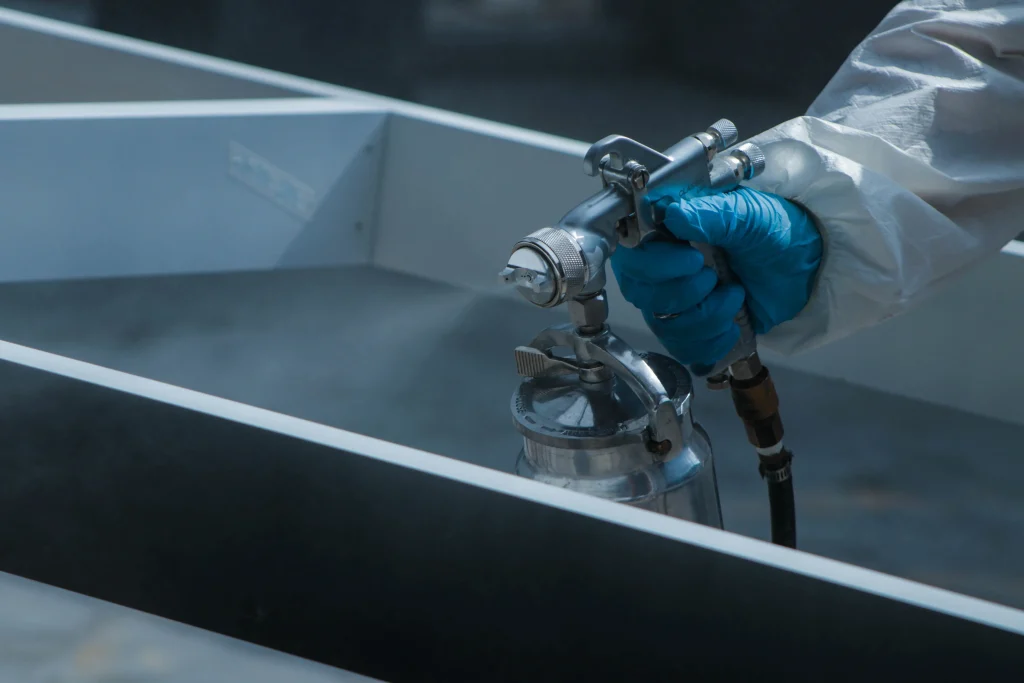
Why Powder Coating Still Requires a Maintenance Plan
Powder coating resists chipping, fading, and corrosion far better than liquid paint, but it isn’t immune to environmental exposure — UV load, moisture, and airborne contaminants still accumulate on the surface over time and left unaddressed, they accelerate the coating’s eventual breakdown. Treating a powder-coated structure as maintenance-free is one of the more common reasons a finish underperforms its rated service life.
We tell property and facility managers the same thing on every project handoff: a coating system that’s rated for 15 to 20 years assumes some baseline of periodic care, not zero attention for two decades.
The Difference Between “Durable” and “Maintenance-Free”
Durability refers to how well a coating resists damage under normal conditions — impact, abrasion, chemical exposure. It does not mean the surface is self-cleaning or immune to the gradual buildup of dirt, salt, or pollutants that every exterior surface accumulates. That buildup, left in place long enough, can accelerate surface degradation even on a well-applied, properly cured finish.
How Exposure Category Changes Maintenance Frequency
A powder-coated structure in a coastal environment, near a road with heavy de-icing salt use, or adjacent to industrial emissions needs a more frequent cleaning schedule than the same structure in a low-exposure inland setting. Matching the maintenance interval to the actual exposure category — rather than applying a generic schedule across every property — is one of the simplest ways to extend a coating’s real-world service life.
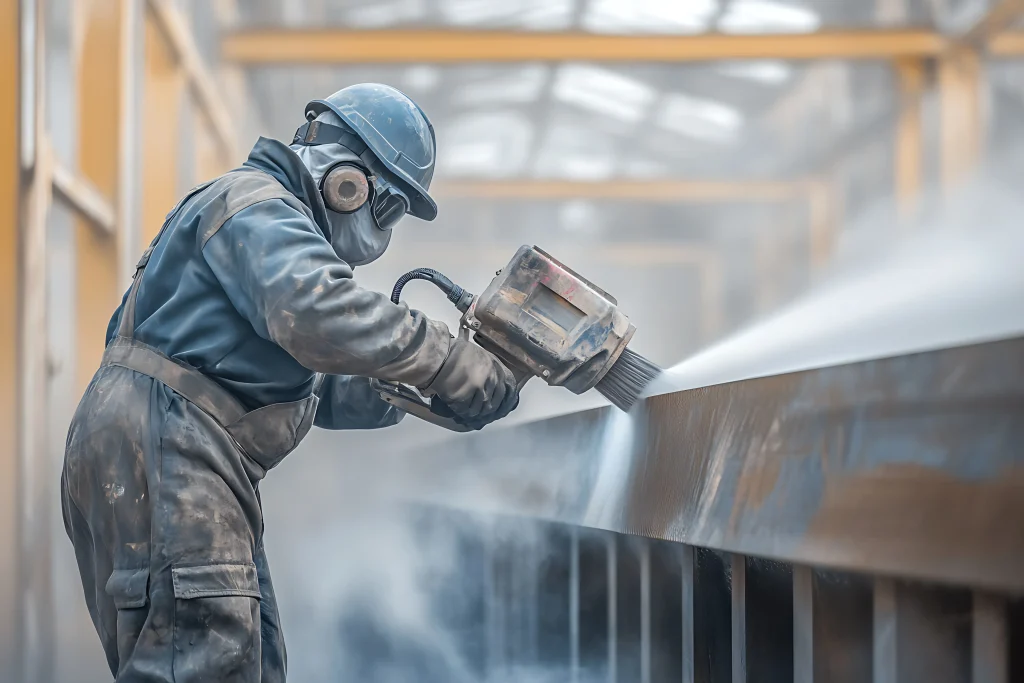
Routine Cleaning: The Foundation of Coating Longevity
Regular washing with mild soap and water removes the surface contaminants that, left in place, gradually degrade a powder coating’s gloss and protective properties — and this single step is the most impactful, lowest-cost maintenance action available for exterior metal structures. Most coating warranties assume this baseline level of care is being performed.
Recommended Cleaning Frequency and Method
For most exterior structures in moderate exposure conditions, we recommend washing with a mild detergent and water at least twice a year, increasing to quarterly in coastal or heavy-pollution environments. A soft brush or cloth is sufficient for most surfaces — abrasive pads or aggressive scrubbing tools can create micro-scratches that compromise the finish over time, even if the damage isn’t immediately visible.
What to Avoid: Harsh Chemicals and Pressure Washing Risks
Solvent-based cleaners, strong acids or alkalis, and high-pressure washing at close range can all degrade a powder coating’s surface faster than the environmental exposure it’s designed to withstand. If pressure washing is used, keeping the nozzle at a safe distance and using a wide fan pattern reduces the risk of forcing water past seams or fasteners into areas the coating wasn’t designed to seal.
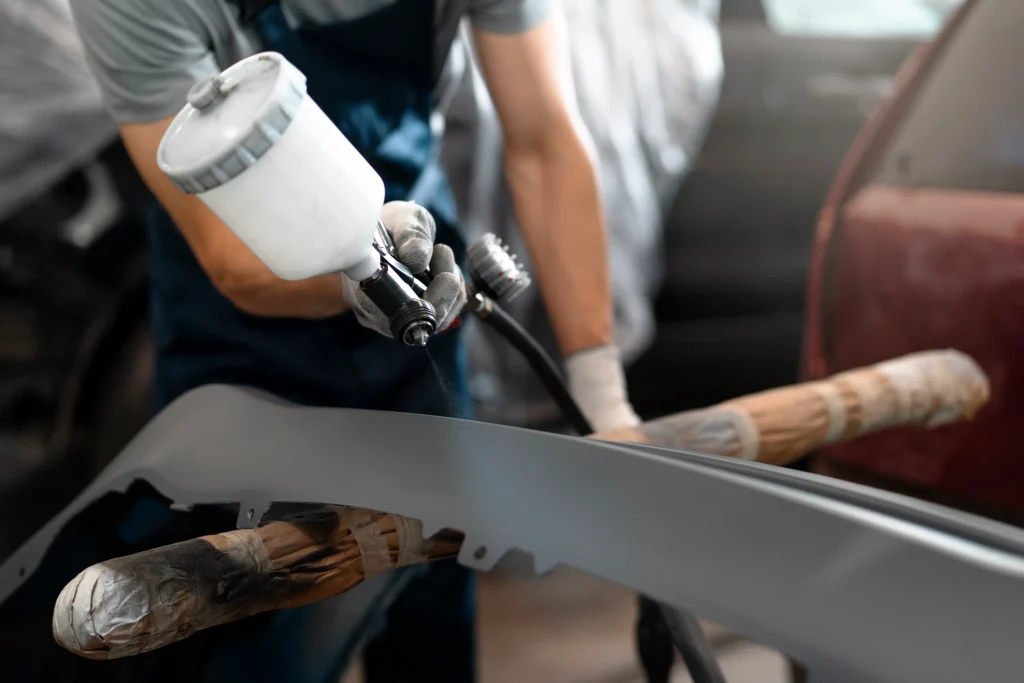
Inspecting for Early Signs of Coating Failure
Catching coating failure early — while it’s still limited to a small area — is significantly cheaper and less disruptive than waiting until corrosion has spread to the base metal, which is why a periodic visual inspection matters as much as cleaning does. Most facility teams already walk their properties regularly; adding a coating-specific checklist to that routine costs little extra time.
Chalking, Fading, and Gloss Loss
Chalking — a powdery residue on the coating surface — is one of the earliest visible signs of UV-related resin breakdown, often appearing before any structural compromise of the finish. Fading and gloss loss frequently accompany chalking and tend to show up first on south- or west-facing surfaces with the most direct sun exposure. Catching this early allows for a recoat before the underlying substrate is at risk, rather than after.
Identifying Corrosion Starting at Seams, Fasteners, and Cut Edges
Corrosion on a powder-coated structure almost always starts at a point where the coating film has been breached — a scratch, a drilled or field-cut edge, a fastener point, or a seam where two coated components meet. These points deserve closer inspection than large flat surfaces, since a small amount of surface rust at a fastener can spread underneath intact-looking coating nearby if it isn’t addressed. We explain the underlying protection mechanism, and why breach points are the most vulnerable spot on any coated structure, in our article on how powder coating protects outdoor steel.
Why Field-Cut or Drilled Edges Need Extra Attention
Any edge cut or drilled after the original coating was applied exposes bare metal that never went through pretreatment or cure, making it a corrosion starting point regardless of how well the rest of the structure was coated. Touch-up coating or a compatible sealant at these points during installation — and rechecking them during routine inspection — closes this gap.
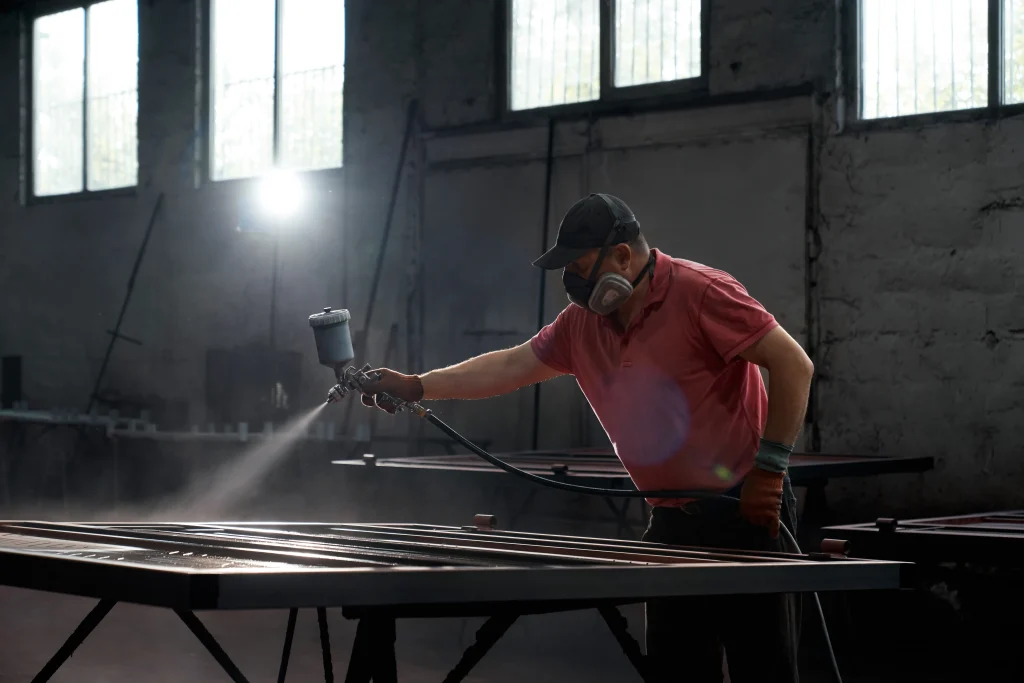
When to Recoat vs. Repair vs. Replace
The right response to a failing coating depends on how far the damage has progressed — surface-level chalking or fading is typically a recoat candidate, while corrosion that has already compromised the base metal structurally may require component repair or replacement rather than simply refinishing over the damage. Making this call correctly avoids spending on a recoat that won’t hold, or replacing a component that could have been refinished.
Recoating an Existing Structure: What’s Involved
Recoating an aged powder-coated structure typically requires full removal of the existing finish down to bare metal, followed by the same pretreatment and cure process used on new fabrication, rather than coating directly over the old finish. Attempting to coat over an existing finish without full stripping usually results in poor adhesion and a shorter service life for the new coating. We cover the full mechanics of proper pretreatment and cure in our detailed guide on the powder coating curing process.
Choosing a Finish for a Recoat vs. Original Specification
A recoat is also an opportunity to upgrade the finish specification if the original coating underperformed for its exposure conditions — switching from a standard formulation to a superdurable or fluoropolymer system, for example, on a structure that showed premature UV fade. We walk through this decision framework in our guide on choosing the right finish for commercial applications.
Confirming Your Coating Vendor Can Handle Recoat and Repair Work
Not every coating shop is equipped to strip and recoat existing structures — this requires different equipment and process steps than coating new fabrication. Before committing recoat work to a vendor, it’s worth confirming their capability for full pretreatment on previously finished parts, along with their standard quality testing. Our full vendor vetting checklist in what to look for in a commercial powder coating provider applies directly to recoat projects as well as new work, and railing and structural components alike, including commercial aluminum railings and wrought iron finishing that are common candidates for recoat evaluation on aging properties.
Frequently Asked Questions

How often should powder-coated exterior structures be cleaned?
At least twice a year in moderate exposure conditions, increasing to quarterly for coastal, high-pollution, or heavy road-salt environments.
Can a powder-coated surface be pressure washed safely?
Yes, with caution — keep the nozzle at a safe distance, use a wide fan pattern, and avoid concentrating high pressure directly on seams, fasteners, or edges.
Is chalking a sign that a structure needs to be recoated immediately?
Not always immediately, but chalking indicates UV-related coating breakdown that will progress over time, so it’s worth planning a recoat before the underlying substrate becomes exposed or compromised.
Conclusion

A powder-coated finish delivers on its durability promise when it’s paired with a basic, consistent maintenance routine — regular cleaning, periodic inspection at seams and cut edges, and a timely recoat decision when early warning signs appear. Skipping this care doesn’t cause immediate failure, but it does erode the service life a coating system was originally rated for, often without anyone noticing until the damage has already reached the base metal.
join our social networks to stay updated with our latest news and events. Don’t miss out on anything and follow our accounts today! Contact us!