Heavy steel weldments present a curing challenge that lighter fabricated parts simply don’t have: thermal mass. A quarter-inch bracket and a three-inch structural weldment absorb heat at completely different rates, and if your coating provider treats them the same way in the oven, one of them is leaving the line under-cured. For fabricators specifying finishes on structural assemblies, machine bases, or heavy equipment frames, understanding the curing process isn’t academic — it’s the difference between a coating that holds for fifteen years and one that fails adhesion testing within months of installation.
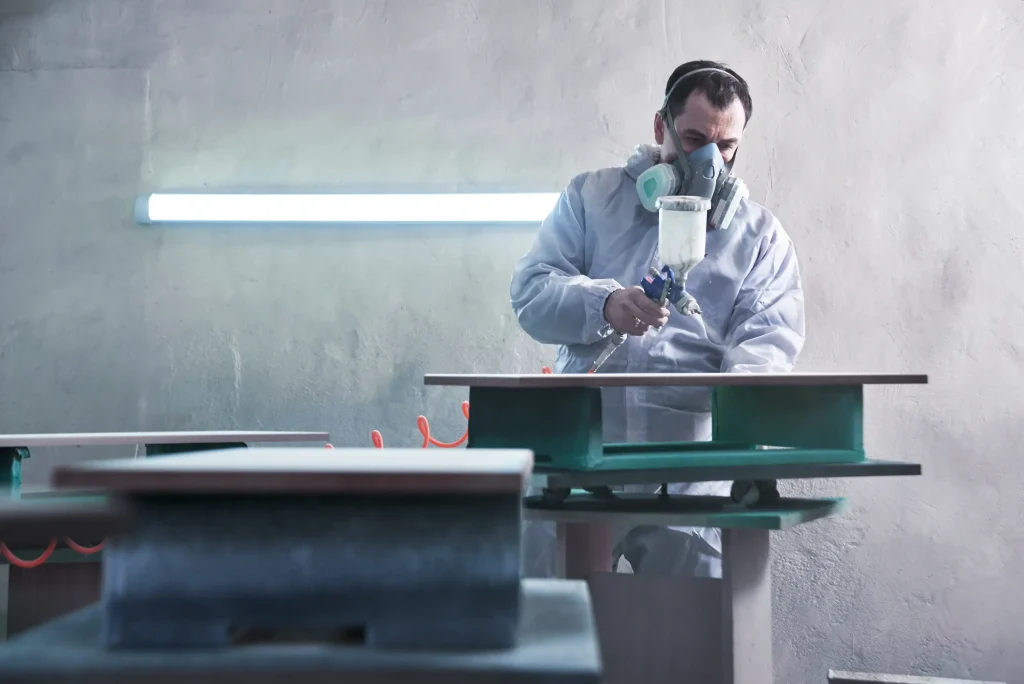
Why Cure Quality Determines Weldment Performance
A powder coating isn’t finished when it looks solid — it’s finished when the resin has fully cross-linked into a continuous protective film. For heavy weldments, that cross-linking process is far more sensitive to mass and geometry than most spec sheets account for, which is exactly where under-cure failures originate.
Cure Temperature vs. Cure Time
Every powder chemistry has a published cure schedule — typically a metal temperature and a dwell time, such as 400°F held for ten minutes. The critical detail fabricators miss is that this temperature refers to the substrate, not the oven air. A thin bracket reaches substrate temperature almost as fast as the oven air does. A heavy weldment lags behind by minutes, sometimes significantly longer depending on section thickness and weld density. If the coating shop is timing the cure off oven set-point instead of actual part temperature, thick weldments are systematically under-cured.
Metal Mass and Heat Absorption in Weldments
Weldments compound this problem because they aren’t uniform mass. A structural frame might combine a heavy base plate, thinner gusset plates, and dense weld beads in a single assembly — each section absorbing and releasing heat differently. This is why a one-size cure schedule breaks down on complex fabrications, and why understanding what to look for in a commercial powder coating provider matters before you ever get to the finish selection conversation — the oven capability and cure verification process behind the coating matter as much as the powder itself.
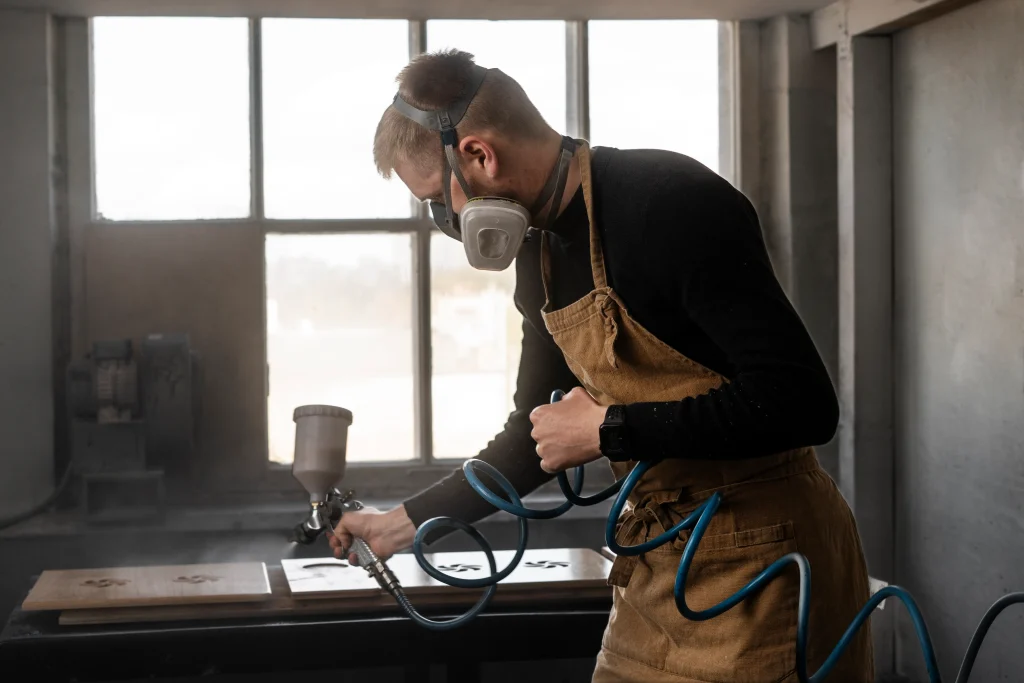
Inside the Curing Process: What Actually Happens to the Powder
Cure is a chemical transformation, not just a physical one — the powder melts, flows into a continuous film, and then undergoes cross-linking, a reaction that permanently locks the polymer structure into place and can’t be reversed by reheating.
Gel Stage and Flow-Out
As the part reaches the powder’s melt temperature, the dry particles liquefy and flow together into a uniform film, filling in the texture left by the electrostatic application process. This gel stage is where surface appearance gets set — orange peel, gloss level, and edge coverage are all determined here, before cross-linking even begins.
Cross-Linking and Film Formation
Once the film reaches its cross-linking temperature and holds it for the required dwell time, the resin molecules chemically bond into a rigid, three-dimensional network. This is the step that actually creates chemical resistance, impact resistance, and long-term durability — and it’s also the step that gets shortchanged when a heavy weldment doesn’t reach full substrate temperature in time.
Under-Cure and Over-Cure Failure Modes
Under-cured coatings look acceptable on the day of application but fail early: reduced chemical resistance, poor adhesion, and a tendency to chip or peel well before the finish should be showing wear. Over-cure, less common but still a risk on thin sections that get “safety margin” dwell times meant for thick ones, causes yellowing, embrittlement, and reduced gloss retention. Both failure modes trace back to the same root cause — treating a mixed-mass weldment as if it cures uniformly.
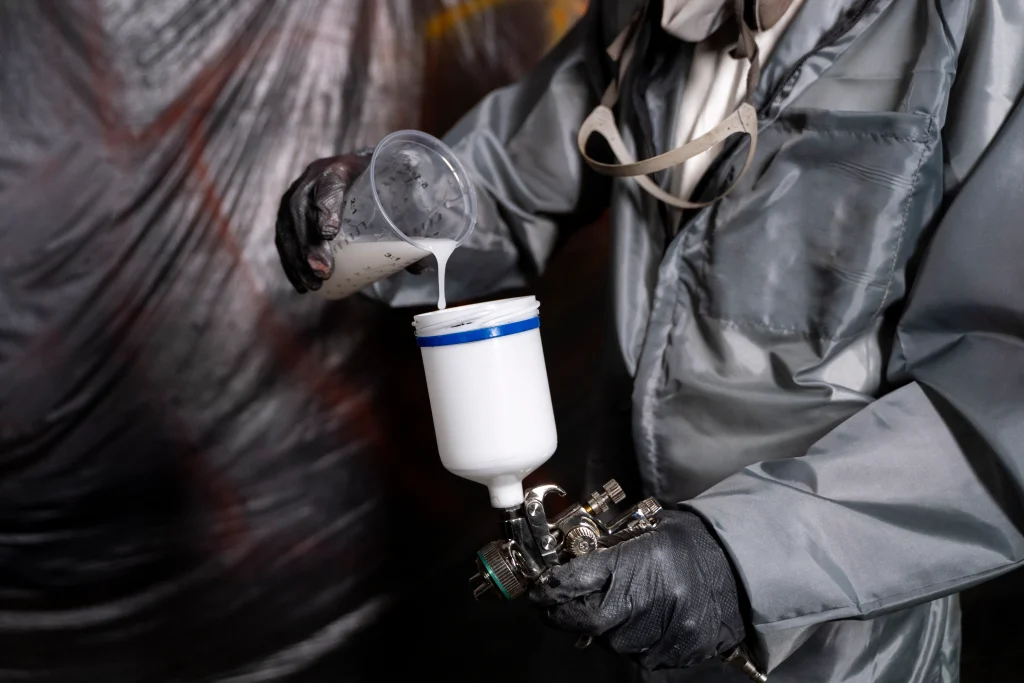
Weldment-Specific Curing Challenges
Welded assemblies introduce two problems flat stock doesn’t have: uneven mass distribution and trapped gas from the welding process itself — both of which directly affect cure quality and finish integrity.
Uneven Mass Distribution Across Welded Assemblies
Because weldments combine multiple metal thicknesses and weld bead concentrations in one structure, the slowest-heating section of the part governs the real cure requirement, not the average. A coating shop working from experience with heavy fabrications will set dwell time to the thickest, densest section — even if that means the thinner sections sit at cure temperature longer than their own spec technically requires. Getting this balance right is part of why how a properly applied finish protects outdoor steel depends as much on process control in the oven as it does on the coating chemistry chosen for the job.
Trapped Gas and Weld Porosity Outgassing
Weld zones can trap gas in porosity or under-cleaned seams, and when that gas expands during the heat of cure, it pushes through the wet or gelling film and creates pinholes or craters — a defect specific to welded fabrications that flat, unwelded stock rarely shows. Pre-heating the part before coating, sometimes called degassing, is the standard countermeasure: it drives trapped gas out before the powder is ever applied, rather than fighting it during cure.
Oven Dwell Time Adjustments for Thick Sections
Experienced coaters extend dwell time incrementally for heavy sections rather than raising oven temperature across the board, since higher temperatures risk over-curing thinner areas of the same assembly. This is a judgment call that depends on real production experience with structural weldments specifically — not a generic cure chart pulled from a powder data sheet.
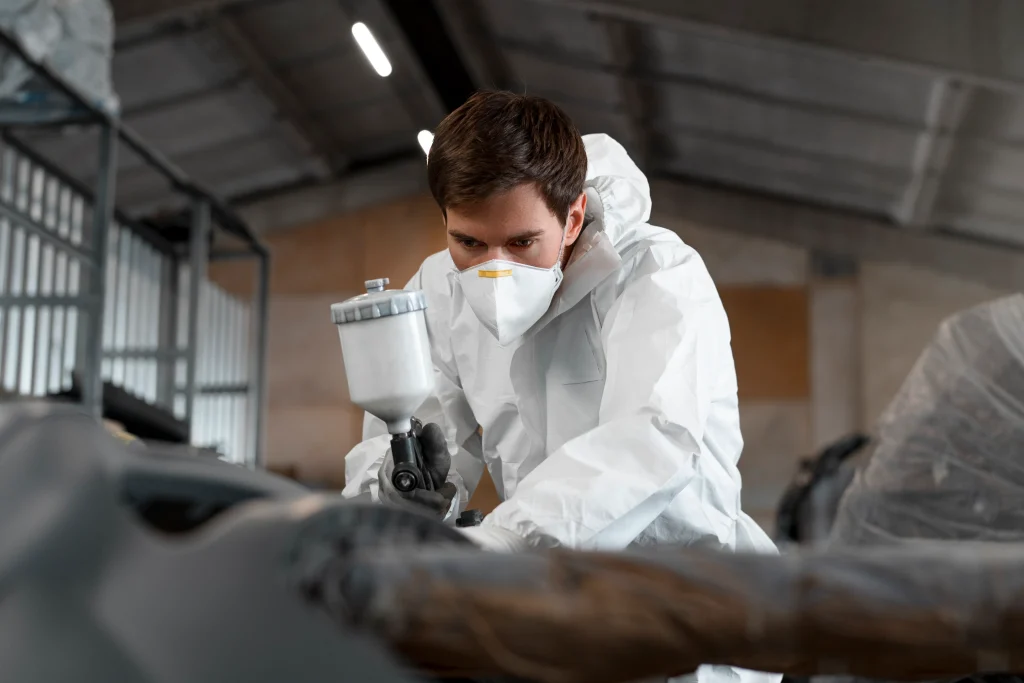
Quality Control: Verifying a Proper Cure
Visual inspection cannot confirm cure quality — a fully cured and an under-cured coating can look identical on the shop floor, which is exactly why verification testing exists as a separate step from visual QC.
Cure Verification Methods
The two standard checks are the MEK (methyl ethyl ketone) rub test, which measures a coating’s solvent resistance as a proxy for cross-link density, and a cure meter reading, which directly measures the degree of cross-linking using a specialized instrument. Reputable coating providers run these checks on production parts, not just test panels, since a test panel cures faster than a heavy weldment sitting in the same oven load.
Why Verification Protects the Warranty
Cure verification isn’t a formality — it’s the data that backs up a finish warranty. Comparing coating methods side by side, this is one of the meaningful differences worth understanding when weighing powder coating against traditional paint systems: paint has no equivalent cure-verification step, which makes powder coating’s QC process a genuine advantage for structural and industrial applications where failure isn’t just cosmetic.
Choosing a Provider Equipped for Heavy Steel Weldments
Not every coating shop is set up to cure heavy fabrications correctly — oven size, burner capacity, and part-handling equipment all limit what can actually be cured to spec, regardless of what the coating chemistry is capable of.
Before committing a heavy weldment to a coating provider, it’s worth confirming oven dimensions and burner capacity against your part’s actual mass, not just its footprint. The same due diligence applies whether the finished piece is a structural frame or an architectural component — the finish selection process for commercial applications and the specifications used in architectural powder coating work both depend on a coating partner that can actually hit cure temperature on the heaviest section of the part, not just the average.
FAQs
How do I know if my weldment was properly cured?
A visual check alone can’t confirm it. Ask your coating provider whether they run MEK rub tests or cure meter verification on production parts, particularly on the heaviest sections of a mixed-mass assembly, rather than relying solely on test panels.
Does pre-heating heavy weldments before coating actually improve the finish?
Yes. Pre-heating, or degassing, drives trapped gas out of weld porosity and seams before the powder is applied, which prevents the pinholes and craters that occur when that gas expands during cure.
Can an under-cured coating be fixed after the fact?
In most cases, no — once a part has cooled and the coating has partially cross-linked, reheating won’t complete the reaction correctly and can introduce additional defects. The reliable fix is stripping the coating and recoating with a corrected cure schedule.
Conclusion
Curing is where a powder coating’s real performance gets decided, and heavy steel weldments make that process genuinely harder than it looks on a data sheet — mixed mass, weld porosity, and uneven heat absorption all demand a cure approach built around the actual part, not a generic chart. The coatings that hold up on structural fabrications are the ones cured to substrate temperature and verified, not just timed against the oven clock. If you’re specifying a finish for heavy weldments on an upcoming project, our team can walk through cure capability, verification methods, and finish selection before the parts go into production — reach out to talk through your specification.
join our social networks to stay updated with our latest news and events. Don’t miss out on anything and follow our accounts today! Contact us!