When commercial fabricators evaluate finishes for steel weldments, the choice between powder coating and traditional liquid paint often determines long-term performance, project cost, and client satisfaction. At our facility, we work daily with structural fabricators, equipment manufacturers, and contractors who need reliable protection for welded assemblies ranging from platforms and frames to heavy machinery bases and architectural steel. This guide compares the two systems in practical terms so you can select the finish that best matches the demands of your commercial steel weldments.
How Powder Coating and Traditional Paint Differ at the Process Level
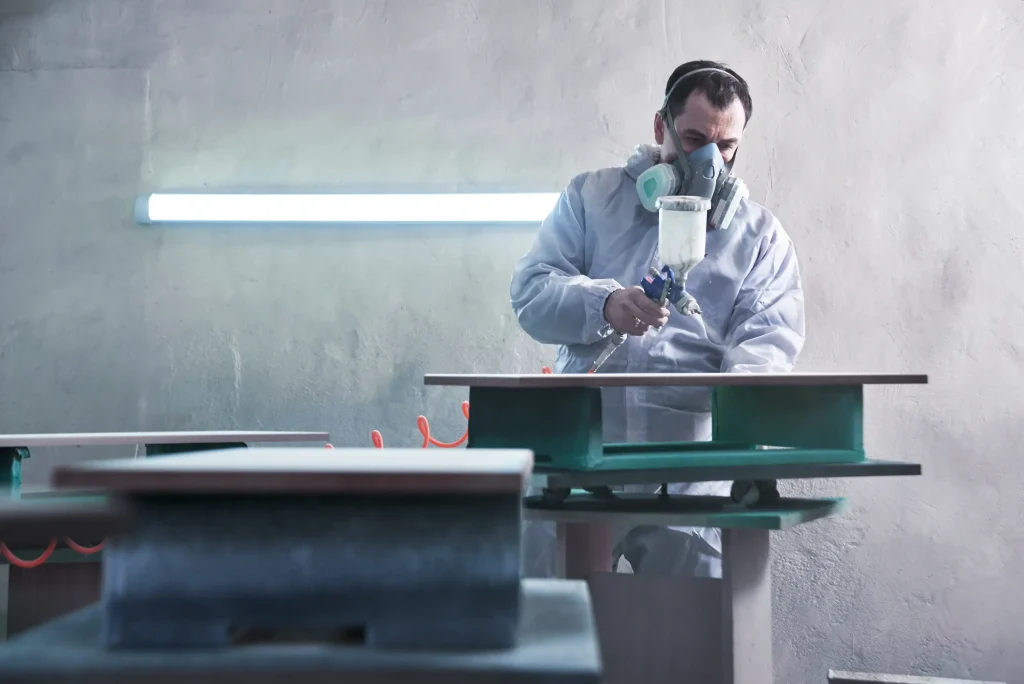
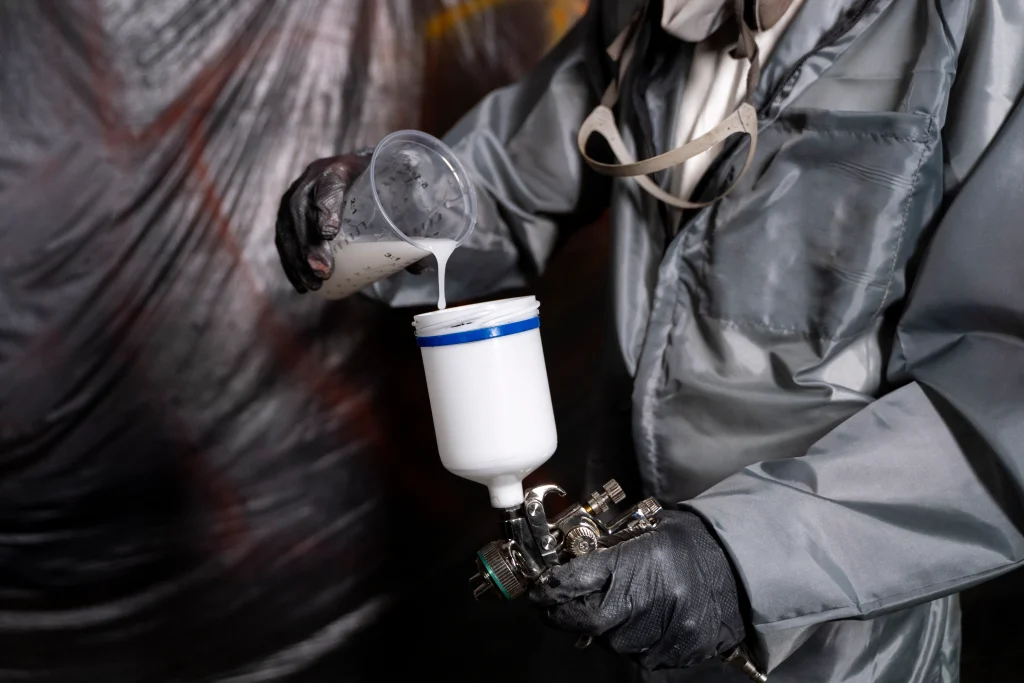
Traditional liquid paint is applied as a wet film that relies on solvents or water to carry the resin and pigments. After spraying or brushing, the coating must flash off and cure, either at ambient temperature or in a low-temperature oven. Film thickness is limited by sagging and solvent entrapment, and multiple coats are frequently required to reach the specified dry-film thickness.
Powder coating begins as a dry, finely ground mixture of resin, pigments, and additives. An electrostatic gun charges the particles so they adhere to the grounded steel part. The coated weldment then enters a curing oven where the powder melts, flows, and cross-links into a continuous film. Because no solvent is present, higher film builds are possible in a single pass without runs or sags. For most commercial steel work we target 2.5 to 4.0 mils dry-film thickness, providing robust coverage over welds, edges, and complex geometries.
Surface preparation remains critical for both systems, yet the consequences of inadequate prep differ. On steel weldments, we typically abrasive-blast to a near-white or commercial blast standard, then apply a suitable pretreatment. Powder coating’s thicker, more uniform film is more forgiving of minor surface irregularities once the steel is properly cleaned, while traditional paint systems can telegraph residual mill scale or weld spatter more readily.
Durability and Performance on Welded Steel Assemblies
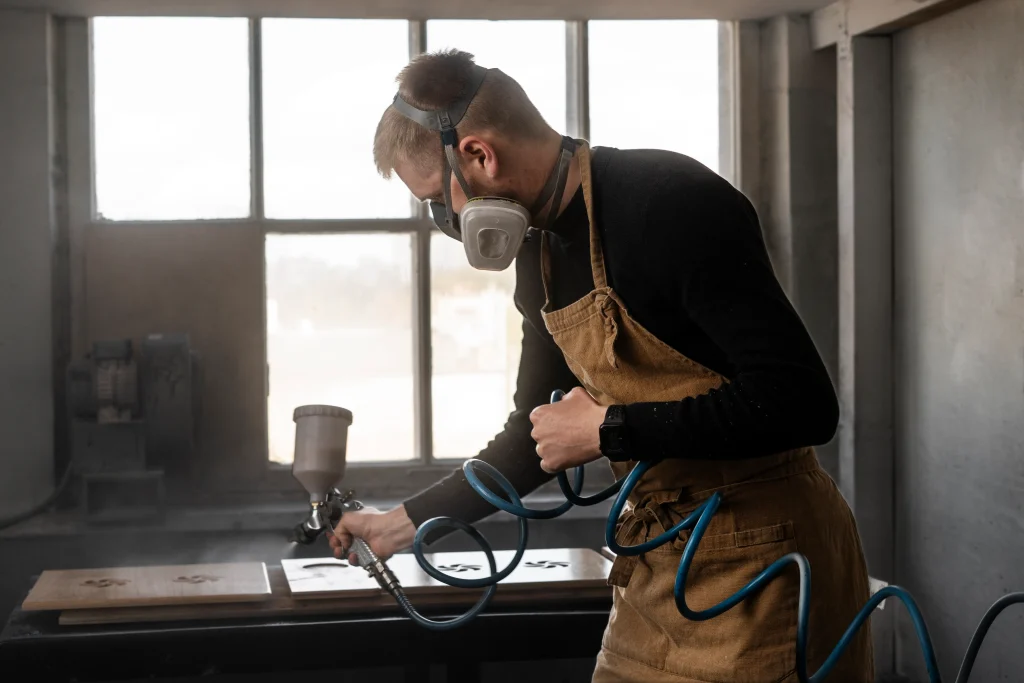
Commercial steel weldments face mechanical abrasion, impact, chemical exposure, and outdoor weathering. Powder coatings generally outperform conventional liquid paints in these environments for several reasons. The thermoset or thermoplastic film is harder and more flexible once cured, resisting chipping and cracking when parts are handled, transported, or installed. Edge coverage is superior because electrostatic attraction pulls powder around sharp corners and into weld toes—areas that liquid paint often leaves thin.
Corrosion resistance is another decisive factor. A well-prepared and powder-coated weldment develops a continuous barrier that slows moisture and oxygen penetration. Traditional paint systems can achieve similar protection, but only when multiple coats and careful stripe coating of welds are applied. In accelerated salt-spray testing and real-world outdoor exposure, high-quality polyester or epoxy powder systems routinely demonstrate longer times to first corrosion and less undercutting at damage sites.
UV stability varies by chemistry. Standard epoxy powders excel indoors or under cover but chalk outdoors. Outdoor-rated polyester powders maintain color and gloss far longer than many alkyd or acrylic liquid paints. For the most severe exposures we recommend super-durable polyesters or fluoropolymer powders when specifications demand maximum weatherability.
Heat-affected zones around welds introduce another variable. Residual stresses and changes in surface chemistry can affect adhesion. Proper blasting removes scale and creates a uniform profile, allowing either system to perform, yet powder coating’s single-coat thickness often provides more consistent protection across these metallurgically altered regions.
Cost Considerations Across the Project Lifecycle
Up-front material and application costs differ, yet total cost of ownership frequently favors powder coating for commercial steel weldments. Powder application can be faster because a single coat often meets thickness requirements that would demand two or three liquid coats. Overspray reclaim systems reduce material waste, especially on high-volume runs. Labor for sanding between coats and solvent cleanup is largely eliminated.
Traditional paint may appear less expensive on a per-gallon basis and can be applied with simpler equipment. However, longer flash and cure times slow throughput, and higher VOC emissions can trigger additional permitting or abatement costs. Field touch-up of damaged liquid coatings is sometimes easier, yet the frequency of touch-up is typically higher because of lower film toughness.
When we calculate lifecycle costs for clients, we include reduced handling damage, fewer warranty claims, and longer intervals before recoating. For weldments destined for outdoor or industrial environments, the extended service life of powder coating usually outweighs any modest difference in initial price.

Environmental and Shop-Floor Advantages
Powder coating generates virtually no VOCs during application and curing. This simplifies compliance with air-quality regulations and improves shop air quality for operators. Traditional solvent-borne paints release significant solvent volumes; even many water-borne systems still contain co-solvents that contribute to emissions. For fabricators operating in regions with strict environmental rules, powder coating reduces regulatory burden and supports sustainability goals that many commercial clients now require.
Waste streams also differ. Excess powder can often be reclaimed and reused, while liquid paint waste and solvent-contaminated materials require special handling and disposal. The dry process further reduces the risk of spills and fire hazards associated with flammable solvents.
Appearance, Texture, and Design Flexibility
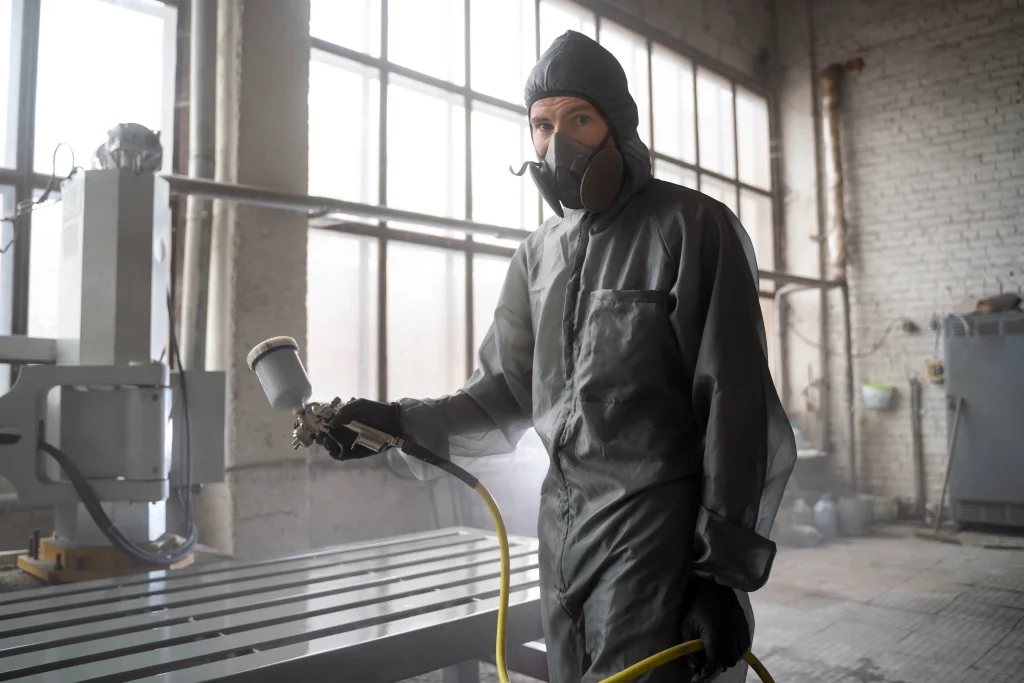
Both systems offer wide color ranges, yet powder coating provides additional texture options—smooth, fine texture, coarse texture, and metallic effects—without the runs or orange peel that can appear in liquid films on complex weldments. Gloss levels from high gloss to matte are readily achieved and remain consistent across large assemblies when process parameters are controlled.
Color matching across multiple fabrication lots is manageable with either system when standards are established early. We maintain rigorous color-control protocols and work with suppliers to ensure batch consistency, an essential requirement for multi-phase commercial projects.
When Traditional Paint May Still Be Preferable
Certain situations favor liquid paint. Extremely large or immovable structures that cannot fit into a powder-coating booth or oven may require field-applied liquid systems. Some specialized chemical-resistance requirements are still better met by high-performance liquid epoxies or polyurethanes. Projects needing frequent color changes with minimal inventory may also lean toward liquid paint because powder changeovers involve more thorough booth cleaning.
For the majority of shop-fabricated commercial steel weldments, however, powder coating delivers superior durability, faster throughput, and lower environmental impact.
Practical Guidance for Specifying the Right Finish
Clear specifications prevent costly misunderstandings. State the required dry-film thickness, performance standard (if any), color and gloss, and surface-preparation requirements. Identify critical surfaces and any areas that must remain uncoated for welding or bolting. Discuss packaging and handling so the finished coating is protected during shipment and installation.
If the weldment will see outdoor exposure, confirm the powder chemistry is outdoor-rated. For indoor industrial environments, epoxy or hybrid powders often provide the best combination of chemical and abrasion resistance. When both appearance and long-term weatherability matter, polyester systems are the workhorse choice for most commercial applications.
Three Frequently Asked Questions
Is powder coating suitable for large or heavy commercial steel weldments?
Yes. Many facilities maintain ovens and material-handling systems capable of processing substantial fabrications. When parts exceed equipment limits, modular coating strategies or selective liquid application on oversized sections can be evaluated. Early discussion of dimensions and weight allows us to confirm capacity and recommend the most efficient approach.
How does powder coating perform on weld seams and sharp edges compared with traditional paint?
Powder coating typically provides thicker, more uniform coverage on edges and weld toes because of electrostatic wrap-around. Traditional liquid paint often requires intentional stripe coating of these high-risk areas to achieve comparable protection. Proper blasting remains essential for both systems, yet the finished powder film is generally more resistant to undercutting if the coating is later damaged.
Can damaged powder-coated weldments be repaired in the field?
Minor damage can be addressed with compatible liquid touch-up paints formulated for adhesion to cured powder. For larger repairs, abrasive cleaning followed by reapplication of powder (when the part can return to the shop) or high-performance liquid systems produces durable results. We supply recommended repair procedures and materials matched to the original coating chemistry.
Conclusion
Choosing between powder coating and traditional paint for commercial steel weldments is ultimately a decision about performance, efficiency, and total cost of ownership. Powder coating offers thicker single-coat films, superior edge and weld coverage, greater mechanical toughness, lower VOC emissions, and longer service life in most commercial environments. Traditional liquid paint retains advantages for certain field applications, specialized chemical exposures, or extremely large structures that cannot be processed in a shop.
We help fabricators evaluate these factors against the specific demands of each project. When surface preparation, powder selection, and process control are executed correctly, the resulting finish protects the steel, satisfies specifications, and reduces lifecycle costs for the end user.
If you are specifying finishes for upcoming commercial steel weldments or comparing options for a current project, contact us to review the requirements. Clear technical discussion at the outset produces better outcomes, fewer delays, and coatings that perform as expected for years to come.
join our social networks to stay updated with our latest news and events. Don’t miss out on anything and follow our accounts today! Contact us!