Every commercial building owner in North Carolina knows the feeling. The summer sun climbs over the parking lot, pours through a wall of storefront glass, and the HVAC system starts working overtime just to keep the lobby comfortable. Utility bills climb, tenants complain about glare, and interior finishes slowly fade. What many property managers don’t realize is that one of the most effective solutions isn’t inside the building at all. It’s mounted on the outside.
Sunshade and canopy systems are architectural features that block, filter, or redirect solar energy before it reaches the glass. When they are properly designed, fabricated, and finished, they deliver measurable energy efficiency benefits while improving the look and function of the entire facade. In this article, we walk through how these systems work, why they save energy, what to look for in materials and finishes, and how to plan a project that performs for decades.
Why Solar Heat Gain Matters for Commercial Properties
Before we talk about solutions, it helps to understand the problem. Solar heat gain is the heat that enters a building when sunlight strikes and passes through windows, curtain walls, and doors. Glass is excellent at letting light in, but it is also very good at letting heat in, and far less effective at letting that heat back out.
For commercial buildings, the impact is significant. Offices, medical facilities, retail centers, schools, and industrial offices often feature large glazed areas on south and west exposures. During peak afternoon hours, those windows act like radiators. The result is a heavier cooling load, higher peak electricity demand, and uneven temperatures from one side of the building to the other.
The Hidden Costs of Unshaded Glass
The cost of unshaded glass goes beyond the monthly utility statement. We regularly see building owners dealing with:
- Oversized HVAC equipment that was specified to handle peak solar loads, which means more upfront investment and more maintenance
- Shorter equipment lifespan because compressors and air handlers run longer cycles during the hottest months
- Occupant discomfort near windows, which often leads to closed blinds and a greater reliance on artificial lighting
- UV damage to flooring, furniture, merchandise, and interior finishes
- Glare that makes computer screens hard to read and reduces productivity
Interior blinds can help with glare, but they have a major limitation. By the time sunlight hits an interior blind, the heat has already passed through the glass and entered the building. Exterior shading stops that energy on the outside, which is exactly where it belongs.
How Sunshade and Canopy Systems Improve Energy Efficiency
Exterior sunshades and canopies work on a simple principle: block the direct sun, keep the daylight. A well-designed system shades the glass during the hours when solar heat gain is highest, while still allowing diffused natural light to reach the interior.
Reducing Cooling Loads at the Source
The most important benefit is a lower cooling demand. Because exterior shading intercepts solar radiation before it strikes the window, less heat enters the conditioned space. This allows HVAC systems to run shorter cycles, reduces peak demand during summer afternoons, and helps maintain more consistent temperatures across the floor plate.
For new construction, this advantage can go even further. When shading is included early in the design process, mechanical engineers can often specify right-sized cooling equipment rather than oversized units, which benefits both the construction budget and long-term operating efficiency.
Horizontal vs. Vertical Shading Strategies
Not every facade needs the same solution. The orientation of the building determines which type of shade performs best:
- Horizontal sunshades and louvered canopies work best on south-facing elevations, where the sun sits high in the sky during summer. A properly sized overhang blocks high summer sun while allowing lower winter sun to enter and provide passive warmth.
- Vertical fins and blades are more effective on east and west elevations, where the sun is low and strikes the glass at a sharper angle in the morning and late afternoon.
- Combination systems blend horizontal and vertical elements for corner exposures or complex facades.
This is why we always encourage owners and architects to treat shading as a design decision rather than an afterthought. The right geometry makes all the difference.
Maximizing Natural Daylight Without the Glare
One of the most overlooked benefits of exterior shading is how it supports daylighting. Instead of shutting out the sun completely, louvered sunshades and perforated canopies soften and redirect light. Occupants enjoy bright, naturally lit spaces without harsh glare or hot spots near the windows.
When building occupants can rely more on daylight, they turn on fewer overhead lights. That reduces electricity use and the heat that light fixtures produce, which further lightens the load on the cooling system. It’s a double efficiency gain that interior blinds simply cannot match.
Supporting Green Building Goals
Many commercial projects today pursue sustainability certifications or must meet increasingly strict energy codes. Exterior shading can contribute to these goals by improving the energy performance of the building envelope, supporting daylighting strategies, and reducing reliance on mechanical cooling. For owners who want to demonstrate environmental responsibility to tenants and customers, sunshades are a visible and practical commitment.
Beyond Energy Savings: Additional Benefits of Canopy Systems
While energy efficiency is often the main reason owners invest in sunshades and canopies, the advantages don’t stop there.
Protection for People and Entrances
Entrance canopies provide weather protection for employees, customers, and visitors. They shelter doorways from rain, reduce water intrusion at thresholds, and create a comfortable transition zone between the parking lot and the interior. For healthcare facilities, schools, and retail centers, a covered entry is a genuine convenience that people notice every single day.
Canopies also protect building components. Doors, hardware, and storefront systems last longer when they aren’t constantly exposed to direct sun and rain.
Architectural Character and Curb Appeal
A flat, featureless facade can make even a new building feel dated. Sunshades and canopies add depth, rhythm, and shadow lines that give a building a modern, professional appearance. They can be finished in bold accent colors that reinforce a brand, or in subtle architectural tones that complement surrounding materials.
These systems often work alongside other exterior metal features, including commercial balcony guardrails, railings, and decorative screens. When all of these elements share a coordinated finish, the building reads as a unified, carefully designed whole.
Why Material and Finish Choices Determine Long-Term Performance
A sunshade system is only as good as the materials and coatings that protect it. Because these components live outdoors year-round, they face intense UV exposure, humidity, heavy rain, and temperature swings. In the North Carolina climate, that combination can break down weak finishes quickly.
Aluminum: The Preferred Material for Exterior Shading
Aluminum is the most common choice for commercial sunshades and canopies, and for good reason. It is lightweight, which reduces the structural load on the building. It is naturally corrosion resistant, easy to extrude into blades and louvers, and strong enough to withstand wind loads when engineered correctly.
The same qualities that make aluminum ideal for sunshades also make it the material of choice for many other demanding commercial applications, from storefront framing to heavy-duty industrial aluminum ladders used on facilities and job sites. In every case, a durable protective finish is what allows the metal to perform at its best.
Powder Coating: The Finish That Protects Your Investment
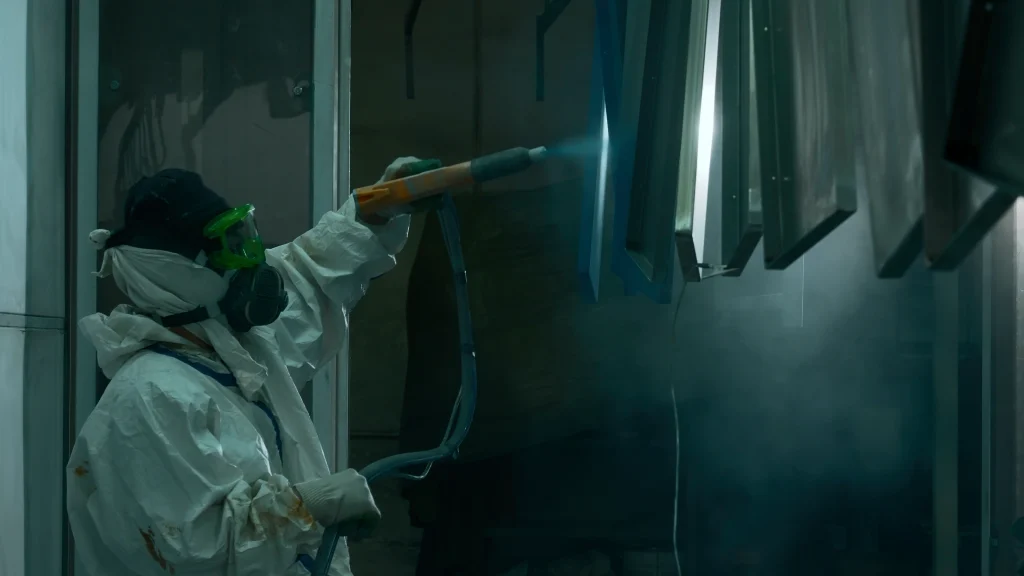
Raw aluminum will eventually oxidize and dull, and a low-quality paint finish will chalk, fade, and peel under constant sun exposure. That is why we recommend architectural-grade powder coating for sunshade and canopy systems.
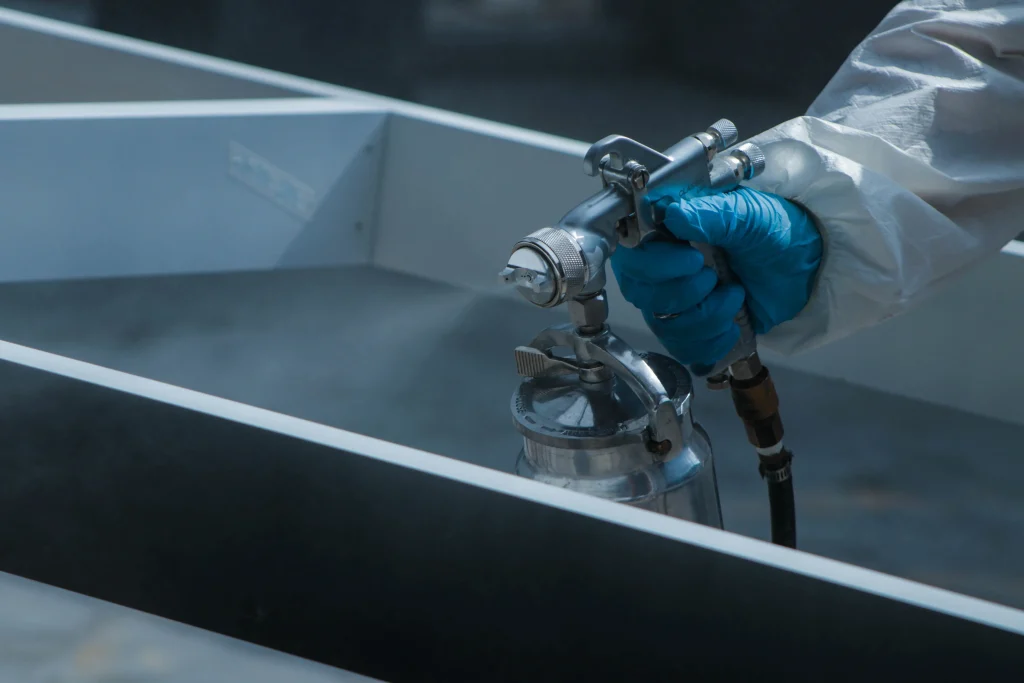
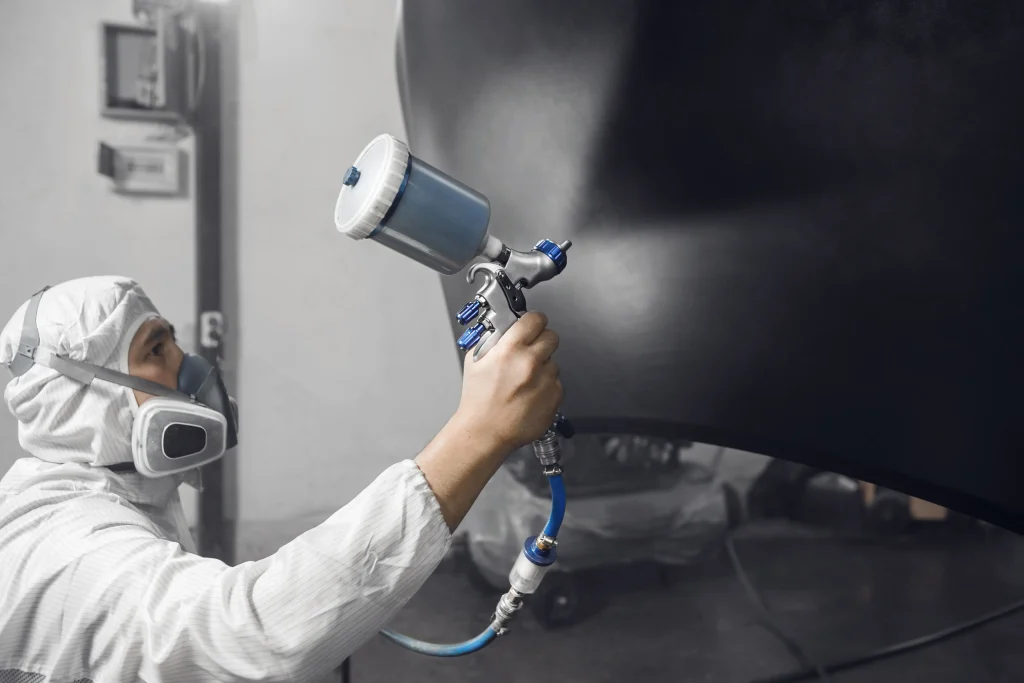
Powder coating is applied as a dry powder and then cured under heat, forming a tough, uniform layer that bonds tightly to the metal. Compared to conventional liquid paint, it offers:
- Superior UV and fade resistance, especially with high-performance architectural powders
- Excellent resistance to chipping, scratching, and moisture
- Consistent color and gloss across every blade, bracket, and frame
- No harmful solvents, making it a more environmentally responsible finish
- A long service life with minimal maintenance
How Color Selection Affects Energy Performance (H4)
Finish color matters for more than aesthetics. Lighter colors reflect more solar energy, which keeps the sunshade itself cooler and reduces the heat radiated back toward the building. Darker colors can create a striking architectural look, but they absorb more heat. We help clients balance design intent with performance, selecting colors and finish types that suit both the building’s style and its energy goals.
Planning a Successful Sunshade or Canopy Project
A shading system involves several parties: the architect, the fabricator, the installer, and the finishing partner. Coordination between them keeps the project on schedule and ensures the finished product meets specifications.
Coordinating Fabrication, Finishing, and Installation
Timing is one of the biggest challenges on commercial projects. Sunshade components often need to be fabricated, coated, and delivered to meet a tight installation window. A delay at any stage can hold up the entire facade schedule.
That is why we always recommend discussing commercial powder coating turnaround times early in the planning phase. Knowing realistic lead times allows general contractors and fabricators to sequence the work properly and avoid costly downtime on site.
Logistics matter too. Working with a local finishing partner that offers convenient local drop-off and pickup options reduces freight complications, minimizes handling damage, and keeps communication simple. For projects in Fayetteville and surrounding communities, a nearby coating shop can make a real difference in keeping everything on track.
Choosing the Right Finishing Partner
Not every coating provider is equipped for commercial architectural work. Before committing, we suggest evaluating a shop’s experience with aluminum, its pretreatment process, its quality control standards, and its ability to handle long or oversized parts. Our contractor’s checklist for sourcing a reliable finishing partner covers the key questions to ask, from surface preparation to color matching and project communication.
Frequently Asked Questions
Do exterior sunshades really save more energy than interior blinds?
Yes. Interior blinds block light, but the solar heat has already passed through the glass and entered the building by the time it reaches them. Exterior sunshades stop the heat outside, before it ever reaches the window. This makes them significantly more effective at reducing cooling loads, especially on south and west-facing elevations.
How long does a powder-coated aluminum sunshade system last?
With proper design, quality pretreatment, and an architectural-grade powder coating, aluminum sunshades can deliver many years of reliable service with very little maintenance. Occasional cleaning with mild soap and water is typically all that is needed to keep the finish looking sharp and performing well.
Can sunshades and canopies be added to an existing commercial building?
Absolutely. Many sunshade and canopy systems are designed specifically for retrofit applications. A structural review confirms the attachment points, and the system is then fabricated and finished to fit the existing facade. Retrofitting shading is one of the most practical ways to improve the energy performance and appearance of an older building without a full renovation.
Conclusion
Sunshade and canopy systems are far more than decorative add-ons. They are high-performance building components that reduce solar heat gain, lower cooling demand, support natural daylighting, protect entrances, and give commercial properties a modern, polished appearance. When built from aluminum and protected with a durable powder-coated finish, they continue delivering these benefits season after season.
The key to getting the most from your investment is planning. Choosing the right geometry for each elevation, selecting a finish that balances appearance and performance, and partnering with an experienced coating provider all contribute to a system that performs as intended for years to come.
join our social networks to stay updated with our latest news and events. Don’t miss out on anything and follow our accounts today! Contact us!