Ask any fabricator who’s replaced a wet-painted handrail three times in five years, and you’ll get the same answer we hear from contractors every week: paint just doesn’t hold up where people actually touch, lean on, and bump into metal all day. High-traffic railings — stairwells, ramps, mezzanines, public walkways — take a beating that most other metalwork never sees, and the finish is either the reason a railing looks new after a decade or the reason it’s back on our shop floor for a redo within two years. Coating choice isn’t a cosmetic decision on these projects; it’s a structural durability decision. Below, we walk through why powder coating has become the standard finish for high-traffic railings, how it holds up against wet paint on the metrics that actually matter, and what the fabrication-to-finish process looks like when it’s done right.
What Makes High-Traffic Railings Different From Standard Coating Jobs
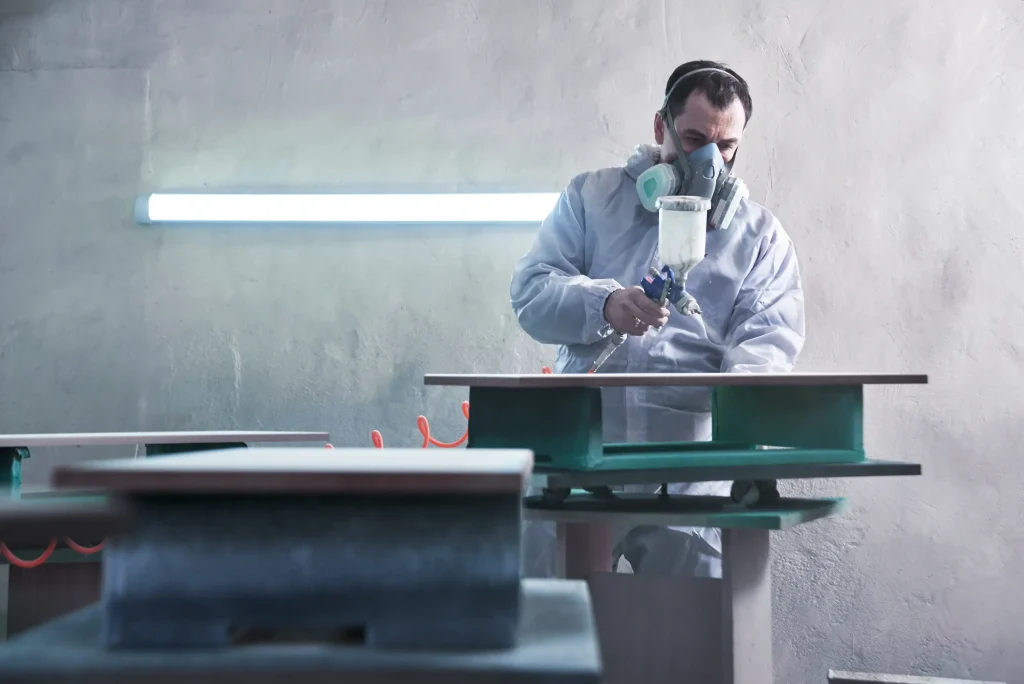
High-traffic railings face constant hand contact, cleaning chemicals, impact from carts and equipment, and — outdoors — direct UV and moisture exposure, which means the finish has to resist wear mechanisms that a fence panel or decorative bracket never encounters.
A railing isn’t just holding a hand; it’s absorbing friction from grip and gloves, getting bumped by hand trucks and rolling equipment, and, in commercial settings, getting wiped down with disinfectants on a near-daily basis. That combination of mechanical and chemical stress is exactly where standard finishes start failing first.
The Physical Stress Railings Endure Daily
Think about what a stairwell handrail actually experiences in a single shift at a warehouse or office building: hundreds of hand contacts, the occasional impact from a cart corner, seasonal temperature swings if it’s near an exterior door, and regular cleaning with commercial-grade disinfectant. None of that is dramatic on its own, but it’s relentless — and relentless, low-grade wear is what strips a weak finish faster than any single impact would.
Why Wet Paint Falls Short on High-Traffic Metalwork
Liquid paint cures through solvent evaporation, which leaves a softer, thinner film than a powder-cured finish — even with a high-quality industrial enamel. That thinner film chips more easily at edges and welds, fades faster under UV, and tends to show wear patterns exactly where hands and equipment make contact most: right at grip height. On a low-traffic decorative piece, that trade-off might be acceptable. On a railing that gets touched hundreds of times a day, it’s the difference between a five-year finish and a fifteen-year finish.
How Powder Coating Outperforms Traditional Finishes on Railings
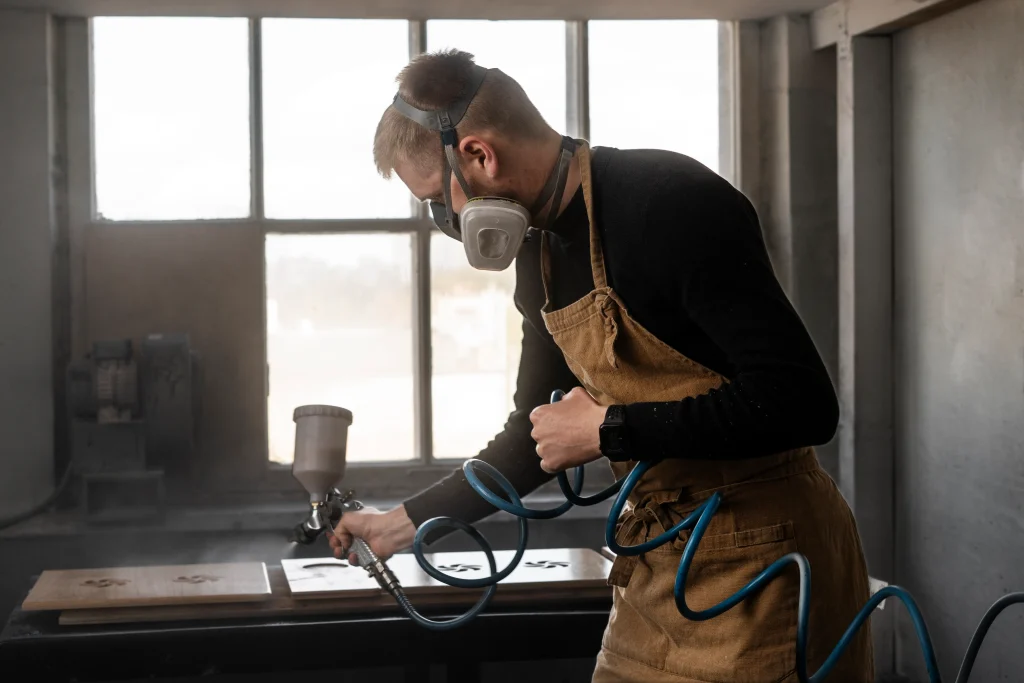
Powder coating applies an electrostatically charged dry powder that’s then cured under heat, forming a thicker, more uniform, and more tightly bonded finish than wet paint — which translates directly into better chip resistance, color retention, and chemical resistance on surfaces that get handled constantly.
This is the part of the conversation where the process itself explains the durability. Because the powder is cured as a continuous film rather than built up in solvent-evaporated layers, it bonds more evenly across edges, corners, and weld seams — exactly the spots on a railing that see the most stress.
Chip, Scratch, and Impact Resistance
The cured powder finish is measurably harder and more flexible than most wet paints, which means it absorbs minor impacts — a dropped tool, a cart bumping the base rail — without chipping down to bare metal. That matters more than it sounds: once a finish chips on steel, that exposed spot becomes the starting point for corrosion, and corrosion under a coating spreads well beyond the original chip. We go deeper into the mechanics of why this finish lasts as long as it does in our breakdown of powder coating durability, which is worth a read if you’re comparing finish options on a spec sheet.
UV Stability and Long-Term Color Retention
For railings installed outdoors or near large windows, UV exposure is a constant. Powder formulations designed for exterior use resist chalking and fading far longer than comparable wet paints, which keeps a railing looking like it did on install day instead of visibly aging within a couple of summers.
TGIC vs. Non-TGIC Polyester: Which Matters for Railings
For most commercial railing projects, we recommend a TGIC or non-TGIC polyester powder — both offer strong exterior durability, but non-TGIC formulations have become more common as facilities move toward finishes with fewer processing byproducts. The right choice usually comes down to the specific environment: coastal or high-humidity sites benefit from the added chemical resistance of certain polyester blends, while interior railings have more flexibility.
Environmental and Compliance Advantages
Powder coating produces essentially zero volatile organic compound (VOC) emissions during application, since there’s no liquid solvent to evaporate. For facilities managing air quality permits or LEED documentation, that’s not a minor detail — it’s often a line item their sustainability team is already tracking.
The Fabrication-to-Finish Process for Commercial Railings
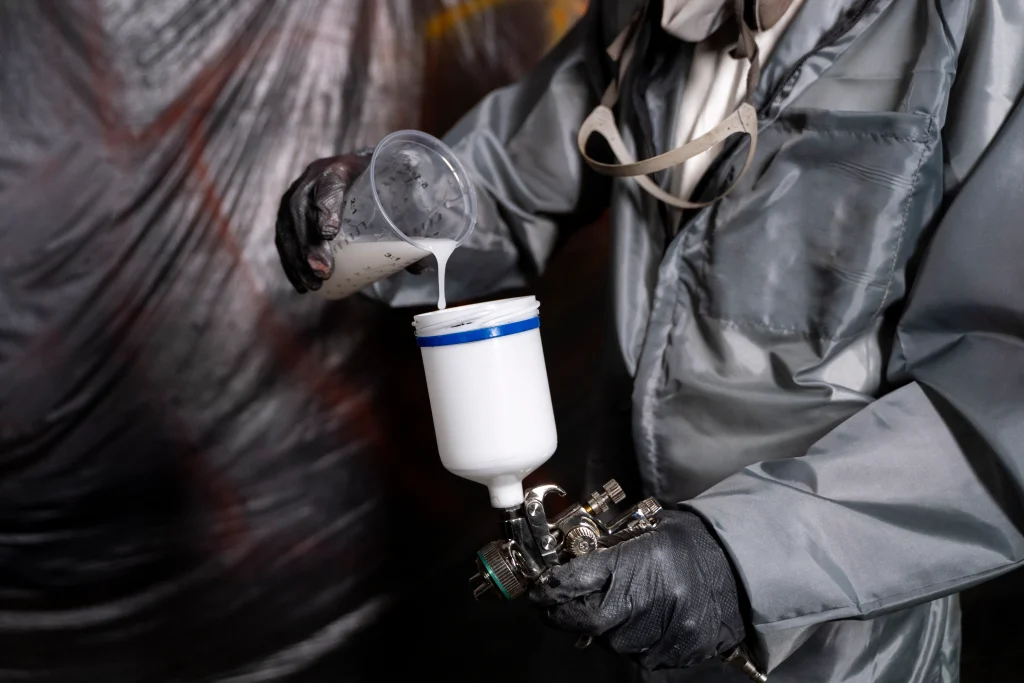
A durable powder-coated railing starts before the coating booth — proper weld cleanup, material selection, and surface prep determine how well the finish bonds and how long it lasts, which is why fabrication and coating work best under one roof rather than as two separate vendors.
Weld Preparation Before Coating
Every weld point is a potential weak spot if it isn’t properly cleaned before coating. Slag, oxidation, and weld splatter all interfere with powder adhesion, which is why surface prep is treated as its own step rather than a formality. We cover exactly how our team handles this in our guide on how to prepare steel weldments for powder coating — it’s the same standard we apply to every railing project that comes through the shop.
Material Considerations: Steel and Aluminum Railings
Steel remains the go-to for railings that need maximum impact resistance, particularly in industrial settings, while aluminum is increasingly common for architectural and exterior applications where weight and corrosion resistance matter more. We build both, and the fabrication approach for a railing project often mirrors what we do on our custom architectural aluminum fencing work — the same attention to clean joints and consistent tolerances applies whether the finished piece is a fence panel or a stairwell rail.
Logistics: Getting Railings to and from the Coating Line
For contractors managing a job site with a tight installation window, coordinating fabrication, coating, and delivery can be the part of the project that’s easiest to underestimate. We built our drop-off and pickup services specifically to take that coordination off a contractor’s plate, so railings move through fabrication and finishing without the project stalling on logistics.
Choosing a Fabricator-Coater for Your Next Railing Project
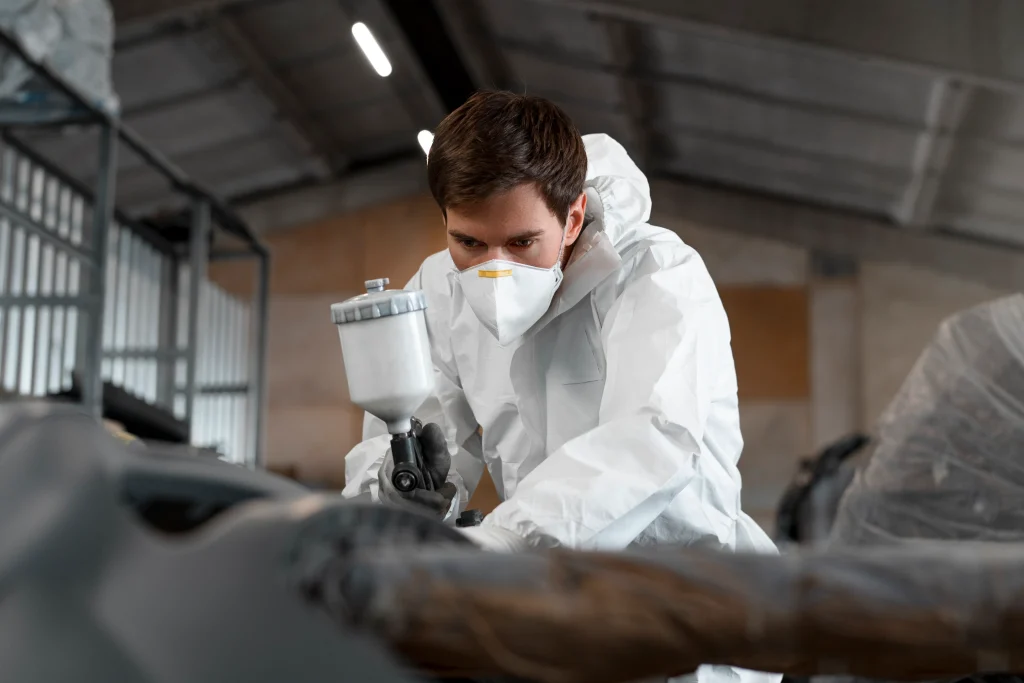
The strongest case for powder coating on high-traffic railings isn’t just the finish itself — it’s what happens when fabrication and coating are handled by the same team. Weld prep, material choice, and coating specification all affect the final durability, and none of those decisions happen in isolation. Once a railing is installed, the finish doesn’t need much to keep performing — our powder coating maintenance and care guide covers the simple upkeep that stretches a well-applied finish even further, which is usually far less than most facility managers expect going in.
Frequently Asked Questions
Is powder coating actually more durable than paint for railings, or is that just marketing?
It holds up under real testing, not just claims. Because powder coating cures as a thicker, continuous film rather than through solvent evaporation, it resists chipping, fading, and chemical exposure better than most wet paints in side-by-side wear comparisons. On high-contact surfaces like railings, that difference shows up within the first year or two of use.
How long does a powder-coated railing finish typically last before it needs attention?
With proper application and normal maintenance, a powder-coated railing can maintain its finish for well over a decade, even in high-traffic commercial settings. Coastal or heavy-UV environments may need earlier attention, but the finish still significantly outlasts comparable wet-paint applications.
Can existing steel or aluminum railings be re-coated instead of replaced?
In most cases, yes. If the underlying metal is structurally sound, stripping the old finish and re-coating is usually far more cost-effective than full replacement. The key factor is surface prep — any existing rust or damaged weld areas need to be addressed before the new coating goes on, or the new finish will fail at the same weak points as the old one.
Conclusion
High-traffic railings put more day-to-day stress on a finish than almost any other piece of commercial metalwork, which is exactly why powder coating has become the standard rather than the upgrade. The thicker film, better impact resistance, and long-term color stability aren’t marginal improvements over wet paint — they’re the difference between a railing that needs attention every few years and one that holds up for a decade or more. If you’re specifying a finish for an upcoming railing project, our team can walk you through material selection, weld prep, and coating options before fabrication even starts — reach out and we’ll get your project scheduled.
join our social networks to stay updated with our latest news and events. Don’t miss out on anything and follow our accounts today! Contact us!
If your project involves railings, fences, or exterior metal structures in the Carolinas, Richards Powdercoat LLC offers professional powder coating for railings and fences in Fayetteville NC — applied to spec, with full surface pre-treatment and same-day quote turnaround.