A weldment that looks clean to the eye can still be carrying enough residue to compromise a powder coating before it ever reaches the pretreatment tank. Weld splatter, heat-affected discoloration, oils from fabrication equipment, and grinding dust all interfere with the chemistry that’s supposed to bond a coating to bare metal — and unlike a coating failure that shows up immediately, poor prep often doesn’t reveal itself until months after installation, when adhesion starts to fail at exactly the points that weren’t properly cleaned.
This guide walks fabricators and shop teams through what actually needs to happen to a steel weldment between the welding table and the coating line, so the finish holds up for the service life it’s rated for.
Why Weld Prep Determines Coating Success More Than the Powder Itself
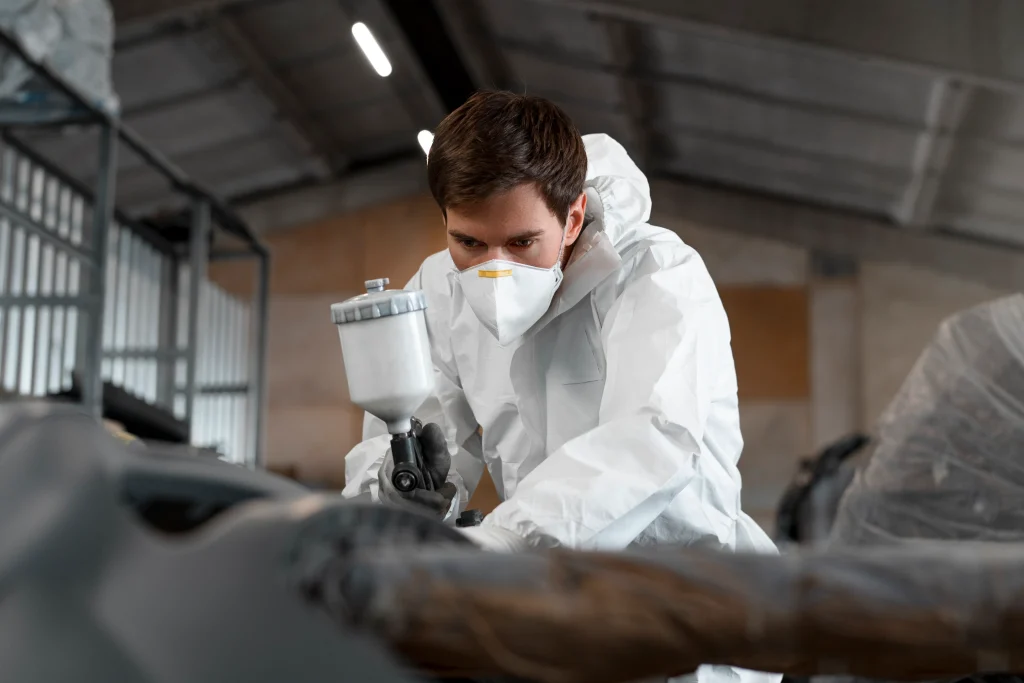
A powder coating’s adhesion and corrosion resistance depend more on how well the substrate was prepared before pretreatment than on the specific powder formulation used, since even a premium coating cannot bond properly to a contaminated or improperly prepped surface. This is the single most common misunderstanding we see from fabrication shops new to commercial powder coating work.
We treat weld prep as a shared responsibility between the fabrication shop and the coating facility, because problems caught before a part enters pretreatment are far cheaper to fix than problems discovered after a finish has already failed in the field.
The Hidden Cost of Skipping Proper Prep
A weldment coated over inadequate prep can look completely acceptable at delivery, since visual inspection doesn’t reveal weak adhesion or micro-contamination trapped under the film. The failure typically shows up later — as flaking, blistering, or corrosion starting exactly at the weld seam — well after the part has already been installed, which makes it a far more expensive fix than catching the issue during fabrication.
What Contaminants Interfere With Pretreatment Chemistry
Oils and cutting fluids from fabrication equipment, weld splatter, anti-spatter spray residue, and airborne shop dust all sit on the metal surface and can block the chemical reaction pretreatment relies on to prepare the substrate for coating adhesion. None of these are always visible to the naked eye, which is why a documented cleaning process matters more than a visual “looks clean” standard.
Step-by-Step Weld Prep Before Pretreatment
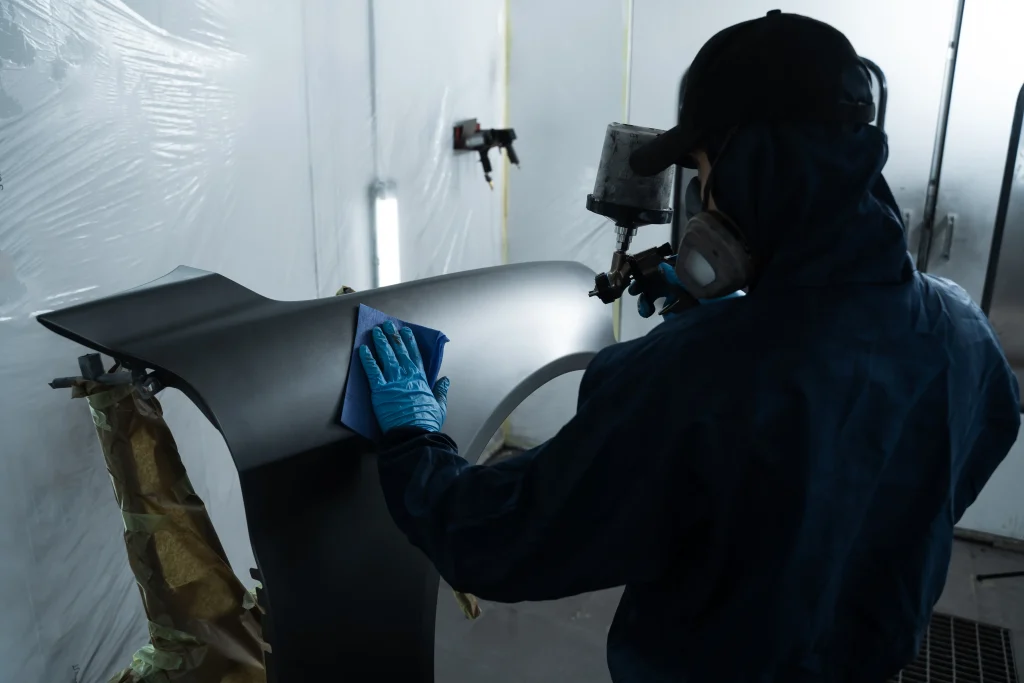
Preparing a steel weldment for powder coating involves removing weld splatter and slag, addressing heat-affected discoloration, degreasing the surface, and confirming a smooth, contaminant-free profile before the part ever reaches the pretreatment stage. Skipping or rushing any one of these steps is where most preventable adhesion failures originate.
Removing Weld Splatter and Slag
Weld splatter creates small, raised deposits on the metal surface that pretreatment chemistry can’t properly reach or bond to, and if left in place, they telegraph through the finished coating as visible surface defects. Grinding or wire-brushing these deposits off before the part moves further down the line addresses both the adhesion issue and the cosmetic one.
Addressing Heat-Affected Zones and Discoloration
The heat from welding can leave discoloration and a altered surface layer around the weld seam that behaves differently under pretreatment chemistry than the surrounding base metal. Light grinding or blasting to normalize this zone helps ensure consistent pretreatment coverage across the entire part, rather than leaving the weld seam as a weak point.
Degreasing: Removing Oils and Cutting Fluids
Fabrication processes — cutting, forming, machining — routinely leave oil and fluid residue on steel surfaces, and this needs to be fully removed before pretreatment, since pretreatment chemistry is designed to react with bare metal, not an oil film sitting on top of it. A proper alkaline degreasing step, rather than a quick wipe-down, is what actually achieves this at a commercial scale.
Surface Profile and Pretreatment: Setting Up for Adhesion
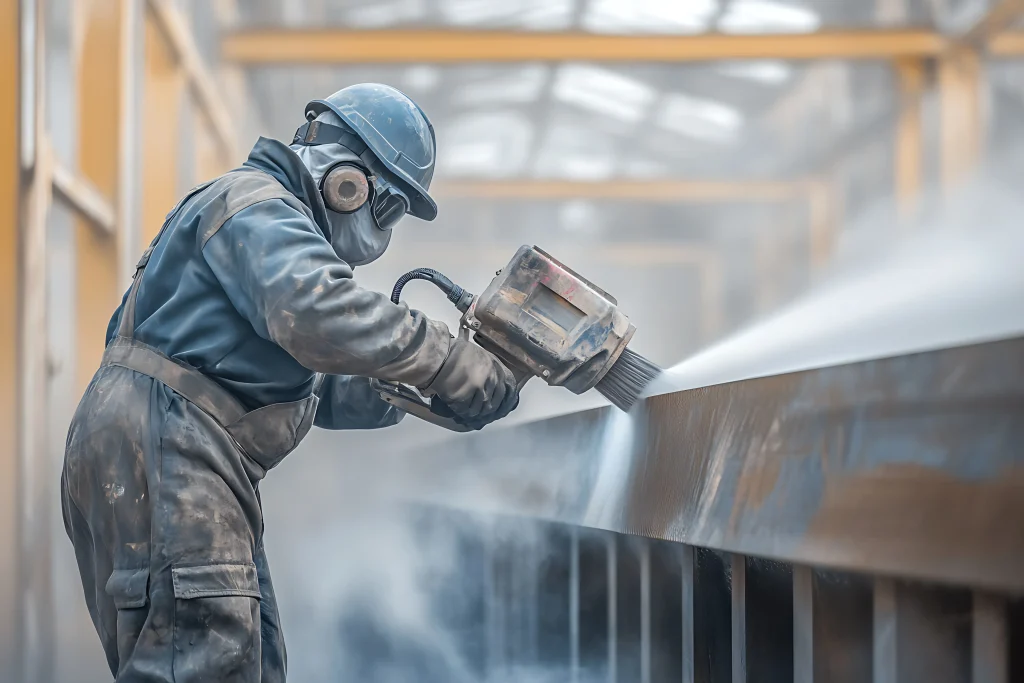
Once contaminants are removed, the metal surface needs the correct profile and chemical conversion coating for the powder to bond to — and this pretreatment stage is where most of the long-term corrosion resistance of the finished part is actually determined, not in the topcoat itself. Understanding this shifts how fabricators should think about what “prep” really means.
Why Pretreatment Chemistry Matters More Than Topcoat Selection
A phosphate or other conversion coating creates a chemically receptive surface that the powder coating bonds to at a molecular level, and this bond is what actually determines long-term corrosion resistance — more so than which specific powder formulation sits on top of it. A weldment with excellent pretreatment and a standard powder often outperforms one with poor pretreatment and a premium powder formulation. We cover this mechanism in detail in our article on how powder coating protects outdoor steel.
Confirming Consistent Surface Coverage on Complex Geometries
Weldments with box sections, overlapping plates, or tight internal corners can trap pretreatment chemistry or, conversely, prevent it from reaching every surface evenly, creating inconsistent adhesion across a single part. Fabrication design choices — drainage holes, accessible seams — made early in the design phase can make a meaningful difference in how evenly a complex weldment pretreats and cures.
Curing Prepared Weldments: What Changes With Complex Geometry
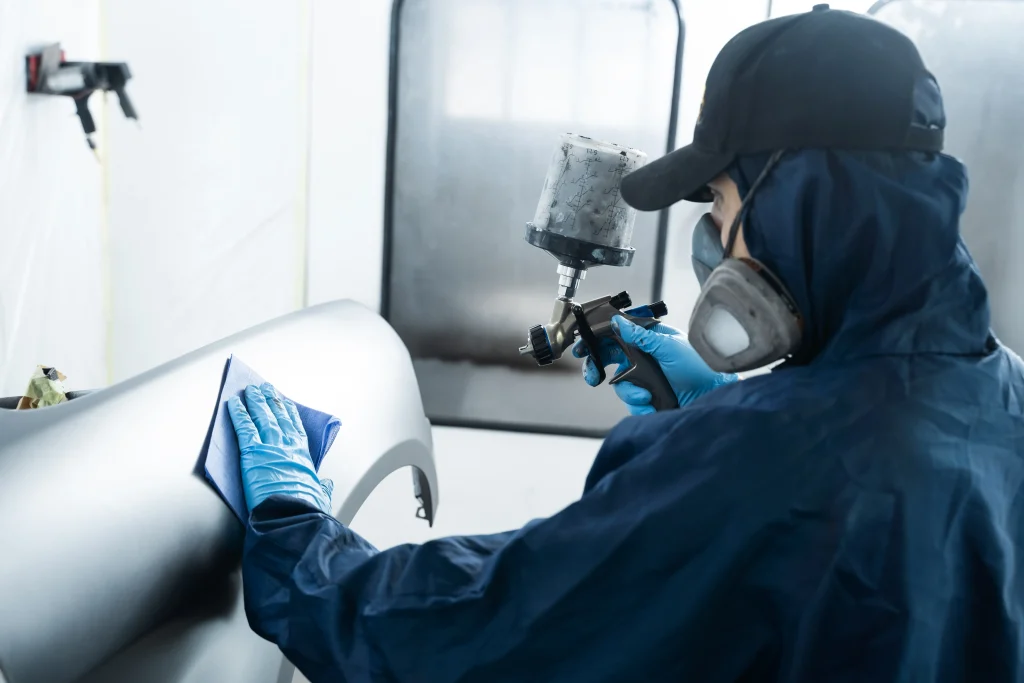
Properly prepared weldments still need a cure cycle matched to their specific mass and geometry, since weld joints and varying material thickness within the same part heat at different rates inside the oven — meaning prep quality and cure quality both have to be right for the coating to perform as rated. Getting prep right and then rushing the cure still results in a compromised finish.
Why Weld Joints Cure Differently Than Flat Sections
A weld joint typically has more mass concentrated in a smaller area than the surrounding flat sections of a part, which means it takes longer to reach the internal temperature required for a full cure. A cure cycle timed to the thinnest section of a weldment can leave these thicker joints under-cured even though the rest of the part cured correctly. We explain exactly how this works, including the difference between surface cure and full cross-linking, in our detailed breakdown of the powder coating curing process.
Verifying Cure With Temperature Monitoring, Not Just Time
Part-specific temperature verification — using thermocouples or temperature-indicating strips on representative sections of a weldment — confirms the part actually reached and held the required cure temperature, rather than assuming a standard oven cycle achieved it. This is especially important on complex weldments where mass varies significantly across the part.
Choosing the Right Finish for a Prepared Weldment
Once a weldment is properly prepped and cured, the finish selection still needs to match the part’s exposure conditions and function, since even excellent prep work doesn’t compensate for a resin system mismatched to how the part will actually be used. Prep and finish selection work together, not independently.
Matching Finish Type to Weldment Application
Exterior structural weldments exposed to direct sun and weather generally warrant a more UV-resistant resin system than interior or moderate-exposure components, and gloss level should be considered alongside color, since high-gloss finishes show handling marks more readily on frequently touched fabricated parts. We break down these trade-offs in detail in our guide on choosing the right finish for commercial applications.
Confirming a Coating Vendor’s Prep Standards Before Committing Volume
Fabrication shops sending regular volume to a coating vendor should confirm the vendor’s pretreatment process and quality testing protocol directly, rather than assuming every commercial coating facility handles prep the same way. We walk through the full vetting checklist — including questions specific to weldment prep — in what to look for in a commercial powder coating provider, and the same standards apply whether the work is structural steel or commercial aluminum railings and wrought iron finishing.
Frequently Asked Questions
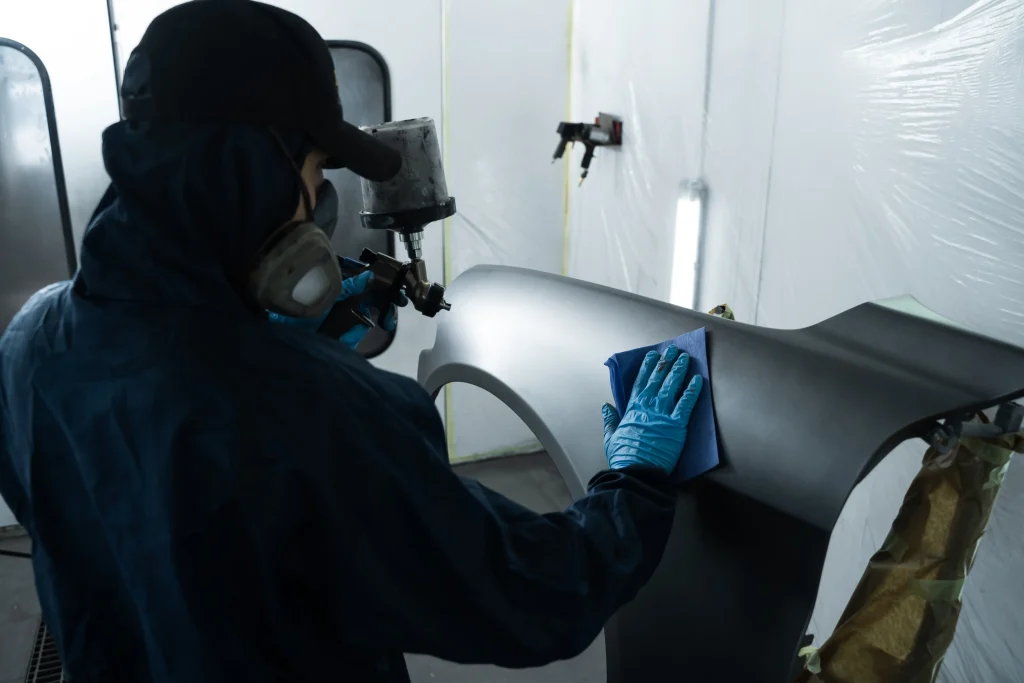
Can a coating facility fix poor weld prep, or does it need to happen before the part arrives?
Some cleanup can be handled at the facility, but it adds time and cost to the production schedule — fabricators who handle weld splatter removal and degreasing before drop-off consistently see faster turnaround and better results.
Does every weld seam need to be ground smooth before powder coating?
Not necessarily smooth, but weld splatter, slag, and heavy discoloration should be addressed, since these contaminants interfere with pretreatment chemistry and can telegraph through the finished coating as visible defects.
Why would a weldment fail at the weld seam specifically, even if the rest of the part coated well?
Weld seams often have more concentrated mass, which can lead to under-curing if the cycle wasn’t verified for that specific joint, and they’re also more likely to carry residual contamination if prep wasn’t thorough — both of which make the seam a common failure point.
Conclusion
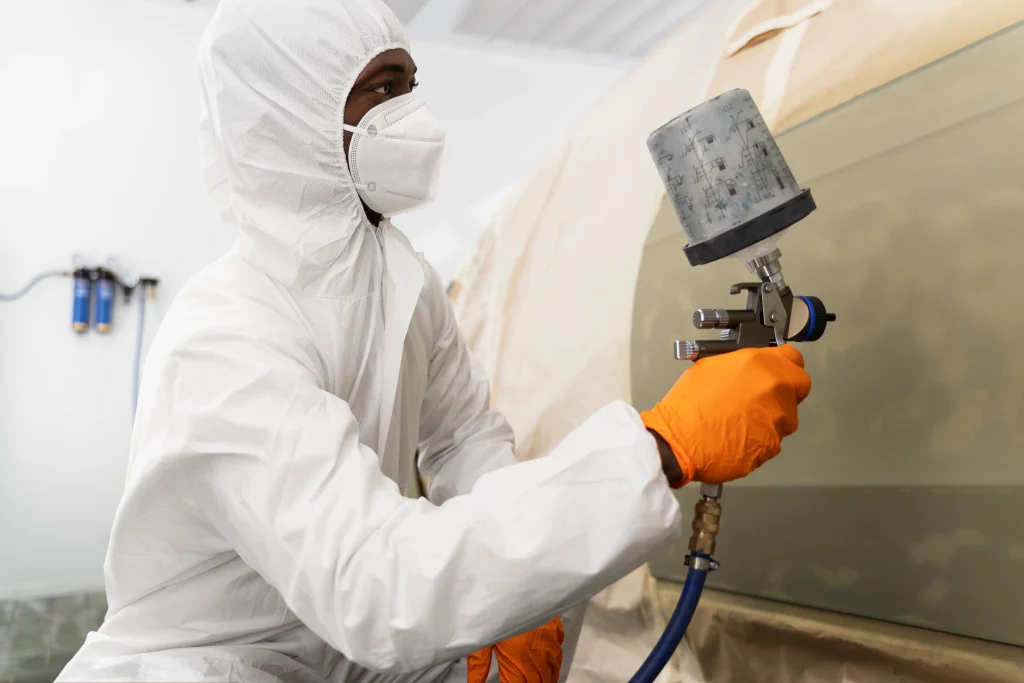
Preparing a steel weldment for powder coating is less about the coating itself and more about everything that happens before the part reaches the pretreatment tank — removing weld splatter, degreasing thoroughly, and confirming a clean, contaminant-free surface. Fabrication shops that build this prep into their standard process, rather than leaving it for the coating facility to catch, consistently see better adhesion results and fewer field failures down the line.
join our social networks to stay updated with our latest news and events. Don’t miss out on anything and follow our accounts today! Contact us!
For industrial and commercial ladder finishing in the region, Richards Powdercoat LLC provides professional powder coating for ladders in North Carolina — corrosion-resistant finishes for steel and aluminum ladders, applied with full surface pre-treatment.