Architectural metal coatings sit at the intersection of engineering and aesthetics. A railing, a curtain wall bracket, or a structural steel beam might be specified for its strength, but it is the finish that determines whether that component still looks and performs the same way after a decade of sun, salt air, and daily wear. For architects, general contractors, and facility managers sourcing commercial coating work, understanding what separates a durable architectural finish from a decorative one is not academic — it directly affects maintenance budgets, warranty claims, and how a building presents itself to the public for years after the ribbon-cutting.
This guide walks through the technical, aesthetic, and procurement considerations that go into specifying architectural metal coatings, from substrate prep to curing science to the questions we recommend asking before signing a commercial contract.
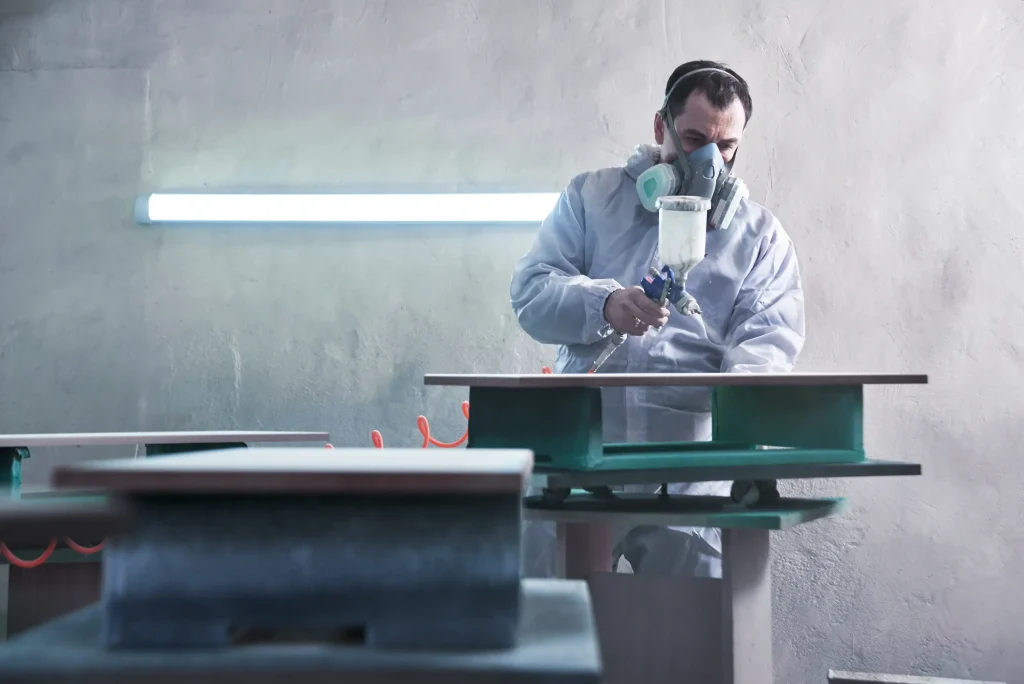
Understanding Architectural Metal Coatings: The Foundation of Long-Term Performance
An architectural coating is a finish system engineered to hold color, gloss, and film integrity on exposed structural or decorative metal for 10+ years, unlike standard industrial coatings rated for shorter service life. That distinction matters because architectural components are rarely repainted on a convenient schedule — a curtain wall panel or a stair railing is often expected to perform for the life of the building envelope.
We treat every architectural coating job as a system, not a single product. The system includes the substrate, the pretreatment chemistry, the powder or liquid formulation, and the cure profile. Weakness in any one of those four links shortens the life of the whole assembly, regardless of how premium the top coat itself is.
What Makes a Coating “Architectural Grade”
Three technical thresholds separate architectural-grade finishes from general commercial coatings:
- UV stability rating — Architectural coatings are formulated with UV-resistant resins (typically polyester or fluoropolymer-based) that resist chalking and fade under direct sun exposure.
- Salt spray resistance — Measured in hours under ASTM B117 testing, architectural systems are expected to exceed 1,000 hours without substrate corrosion.
- Film thickness consistency — Architectural specifications usually call for a tighter mil-thickness tolerance than standard industrial work, because uneven film thickness shows up visually on flat architectural panels in a way it never would on a hidden bracket.
The Role of the Substrate in Coating Selection
The base metal dictates almost every downstream decision — pretreatment chemistry, cure temperature, and even which finish families are viable. Aluminum and steel are the two substrates we handle most often on commercial and architectural work, and they behave very differently under the same coating line.
Steel vs. Aluminum Preparation Requirements
Steel typically requires an iron-phosphate or zinc-phosphate pretreatment to create a surface the coating can chemically bond to, along with careful attention to weld seams and mill scale removal. Aluminum, by contrast, needs a chromate-free conversion coating in most modern commercial shops, and its lower melt point means cure schedules must be tightly controlled to avoid distortion — a real risk on thin-gauge aluminum railings or extruded facade components, as we cover in more detail in our guide to commercial aluminum railings and wrought iron finishing.
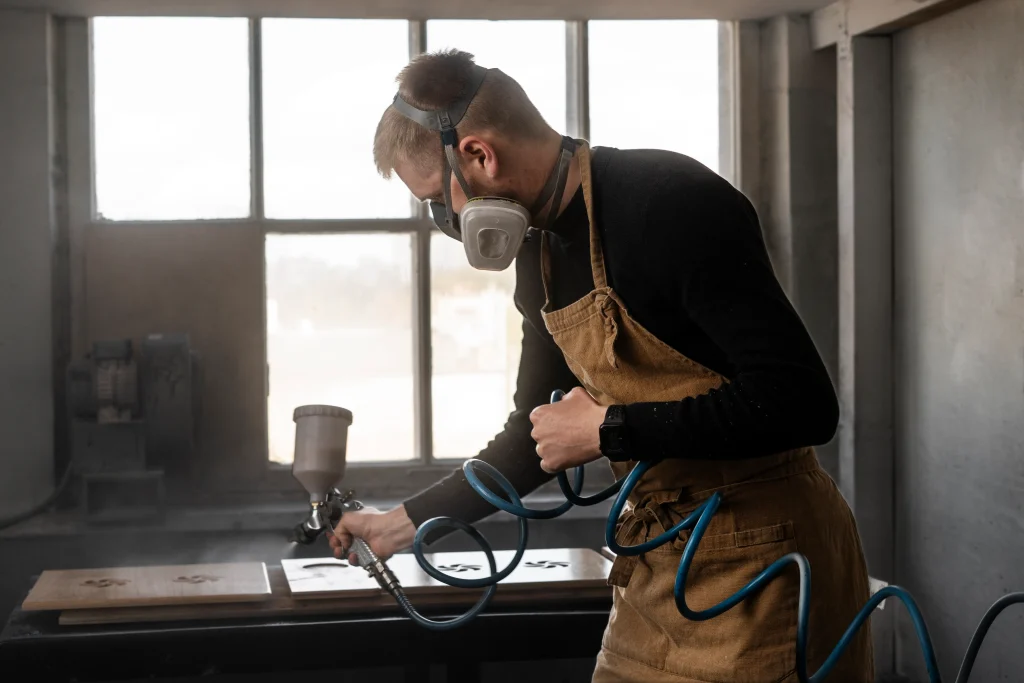
The Powder Coating Curing Process and Why It Matters for Architectural Applications
Curing is the chemical reaction, driven by heat, that transforms sprayed powder from a loose film into a cross-linked, durable finish — and getting this step wrong is the single most common cause of premature coating failure on commercial projects. Unlike liquid paint, powder coating does not simply “dry”; it undergoes a molecular cross-linking reaction that only completes correctly within a specific temperature and time window.
Oven Cure Cycles and Film Integrity
Most architectural powder systems cure between 350°F and 400°F, held for 10 to 20 minutes once the part itself reaches temperature — not the oven air. This is a critical distinction: a thick steel bracket and a thin aluminum panel loaded into the same oven will reach that internal temperature at very different rates, which is why part geometry and mass have to be factored into every cure schedule rather than relying on a single fixed timer. We break down the full mechanics of this process, including the difference between gel time and full cure, in our detailed explanation of the powder coating curing process.
Common Curing Failures and How to Avoid Them
Under-cured film is the most frequent — and least visible — defect in commercial coating work. It often passes a basic visual inspection but fails prematurely in the field through chalking, reduced impact resistance, or solvent sensitivity. The fix is procedural, not cosmetic: verified part-temperature monitoring (using thermocouples or temp-strips on representative parts), rather than trusting oven-set temperature alone.
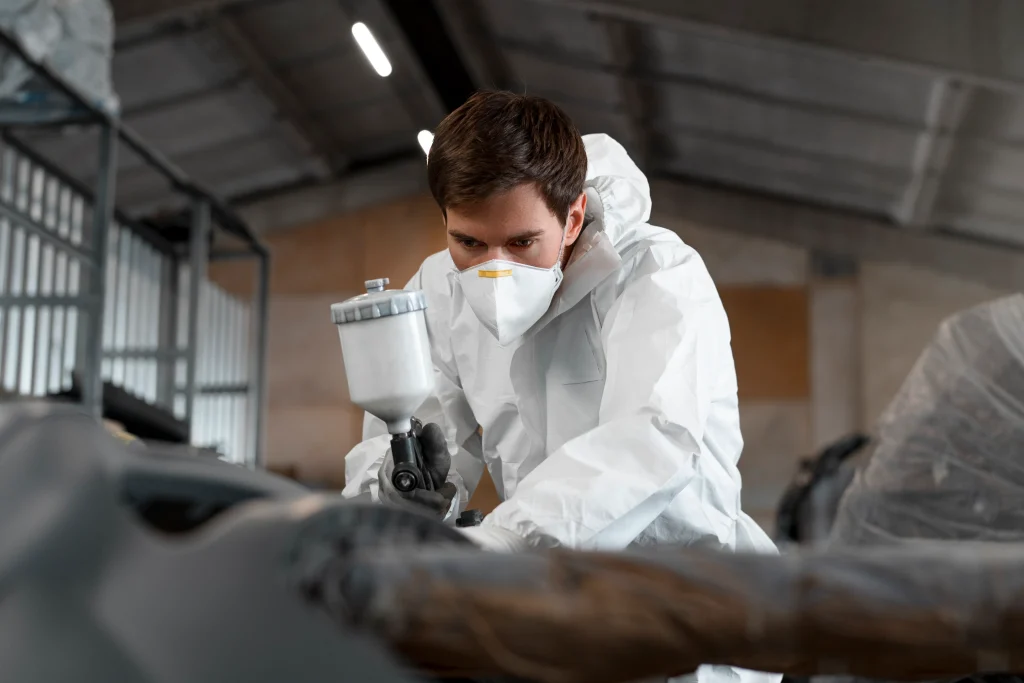
Choosing the Right Finish for Commercial and Architectural Projects
Selecting a finish is a balance of three variables — appearance, substrate exposure, and maintenance tolerance — and the “best” finish changes depending on which of those three the project prioritizes. A finish chosen purely on a color chip rarely performs the same once it is exposed to a real building envelope, so we walk clients through performance trade-offs before aesthetics.
Matte, Satin, and Gloss: Aesthetic and Functional Trade-offs
- Gloss finishes show the most dramatic color depth but also show scratches, fingerprints, and surface imperfections more readily — a consideration for handrails and high-touch surfaces.
- Satin finishes offer a middle ground that hides minor surface irregularities while retaining color richness, making them a common default for commercial storefront framing.
- Matte finishes minimize glare and camouflage minor handling marks, which is why they show up frequently on high-traffic architectural steel like stair stringers and structural columns.
Textured and Metallic Finishes for Facades and Railings
Textured powders (wrinkle, hammertone, or fine-texture formulations) do more than add visual interest — they physically mask substrate imperfections like weld grinding marks or minor pitting, which matters on retrofit and renovation projects where the underlying metal isn’t brand new. Metallic and mica-infused finishes, meanwhile, have become a common specification on architectural railings and facade accents because they read differently under changing daylight, adding depth that flat colors can’t replicate. Our team walks through this decision framework project by project in our guide on choosing the right finish for commercial applications.
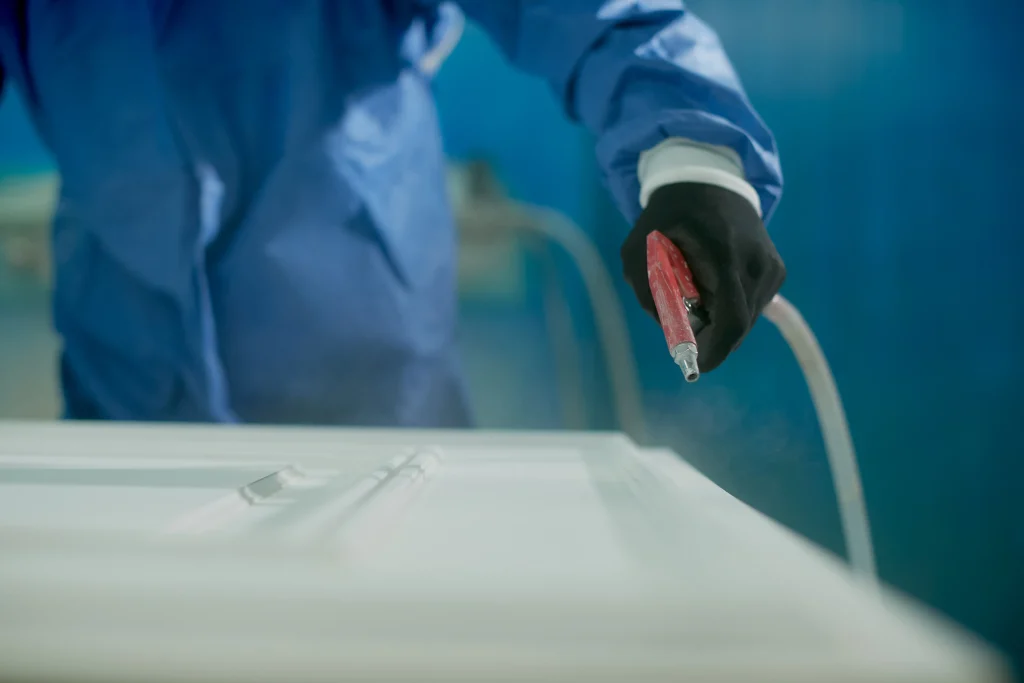
Protecting Architectural Metal From the Elements
Environmental exposure — UV load, humidity cycling, and salt or industrial contaminants in the air — is the primary driver of coating failure on architectural metal, more so than mechanical wear in most cases. Understanding the specific exposure profile of a project’s location changes which coating chemistry actually makes sense to specify.
UV Resistance and Chalking
Chalking — the powdery surface residue that appears on degraded coatings — is a resin breakdown caused by prolonged UV exposure. Standard TGIC polyester formulations resist this reasonably well for interior or moderate-exposure exterior work, but superdurable polyester or fluoropolymer systems are the appropriate specification for facades and railings with direct, sustained sun exposure.
Corrosion Resistance for Coastal and Industrial Environments
Salt-laden air and industrial airborne contaminants accelerate corrosion at both the coating surface and, more critically, at any breach point (scratches, drilled holes, or field-cut edges) where bare metal becomes exposed. Proper pretreatment and film thickness are the primary defense here, which is why we treat corrosion protection as a pretreatment and process discipline rather than something a thicker topcoat alone can compensate for — a topic we cover at length in our breakdown of how powder coating protects outdoor steel.
What to Look for When Vetting a Commercial Powder Coating Partner
Choosing a coating vendor for architectural or commercial-scale work comes down to verifiable process control — documented pretreatment steps, in-house quality testing, and cure verification — rather than price alone. A finish that looks acceptable on delivery day but fails within two years costs a project far more in warranty disputes and re-work than a slightly higher upfront quote from a shop with disciplined process controls.
Certifications, Equipment, and Quality Control
We recommend asking any prospective coating partner directly about their pretreatment stages, their film-thickness testing protocol, and whether they perform batch adhesion testing (such as cross-hatch testing) rather than relying on visual inspection alone. These specifics matter more for architectural work than a general list of past clients, since they speak directly to whether the process behind the finish is repeatable. We outline the full vetting checklist in our guide on what to look for in a commercial powder coating provider.
Turnaround Time and Capacity for Architectural-Scale Projects
Architectural and commercial projects frequently involve large batches of matching components — railing sections, panel arrays, or structural steel runs — that all need to match in color and finish. Capacity and oven size become practical constraints here: a shop that can’t run full batches in a single cure cycle risks visible lot-to-lot color variance across a facade or a long railing run.
A-Z Glossary of Architectural Coating Terms
- Adhesion — the bond strength between coating and substrate.
- Cure — the chemical cross-linking reaction that finalizes a powder coating.
- Film thickness — the measured depth of applied coating, typically in mils.
- Gloss unit (GU) — a measured value of surface reflectivity.
- Pretreatment — chemical preparation applied to metal before coating for adhesion and corrosion resistance.
- Substrate — the base metal being coated (steel, aluminum, etc.).
- Superdurable polyester — a UV-enhanced resin formulation used for high-exposure exterior work.
- TGIC polyester — a standard powder chemistry known for good weatherability at moderate exposure.
Frequently Asked Questions
How long does an architectural powder coating finish typically last?
With proper substrate prep and the correct resin selection for the exposure level, a well-applied architectural powder finish commonly performs for 15 to 20 years before recoating is needed.
Can powder coating be applied to previously painted or coated metal?
In most cases, yes — but the existing coating usually needs to be fully stripped rather than coated over, since layering powder over an unknown prior finish risks adhesion failure.
Is powder coating suitable for both interior and exterior architectural elements?
Yes, though the resin chemistry should change based on exposure — interior elements can use standard TGIC polyester, while exterior facades and railings should specify superdurable or fluoropolymer systems for UV resistance.
Conclusion
Specifying architectural metal coatings well means treating the finish as a system — substrate prep, pretreatment, formulation, and cure — rather than a single product decision made from a color chart. Projects that get this right avoid the far more expensive problem of premature chalking, corrosion, or lot-to-lot color mismatch on a highly visible building surface.
join our social networks to stay updated with our latest news and events. Don’t miss out on anything and follow our accounts today! Contact us!