When it comes to industrial and commercial worksites, a ladder is never just a ladder. It’s a piece of safety-critical equipment that has to hold up under repeated use, harsh environmental exposure, and the weight of workers carrying tools, materials, or equipment. For fabricators, contractors, and facility managers, choosing the right heavy-duty aluminum ladder means understanding not only the regulatory landscape but also how material quality, fabrication precision, and finish protection work together to keep people safe.
In this guide, we’ll walk through the safety regulations that govern industrial aluminum ladders, why standard off-the-shelf options often fall short for demanding applications, and how custom-engineered solutions can solve problems that generic products simply can’t.
Why Industrial Aluminum Ladders Demand a Different Standard
Aluminum has become the material of choice for industrial ladder systems for good reason. It’s lightweight, corrosion-resistant in its raw state, and strong enough to support significant loads without adding unnecessary weight for workers who move ladders throughout a job site or facility. But “industrial-grade” isn’t a marketing term — it’s a functional requirement with real regulatory teeth behind it.
Unlike a residential stepladder, a heavy-duty industrial aluminum ladder is expected to perform under continuous, repeated stress: workers climbing multiple times per shift, exposure to weather or chemical environments, and use in settings where a failure isn’t just inconvenient — it’s dangerous.
Understanding OSHA and ANSI Requirements for Industrial Ladders
In the United States, two frameworks govern ladder safety on commercial and industrial job sites:
- OSHA (Occupational Safety and Health Administration) sets the legal requirements employers must follow, including inspection protocols, maximum load limits, and proper usage procedures.
- ANSI (American National Standards Institute), particularly the A14 series of standards, defines the engineering and performance benchmarks manufacturers must meet — covering everything from rung spacing to structural integrity testing.
Together, these standards dictate how a ladder must be designed, tested, and maintained. Facilities that fail to meet these benchmarks don’t just risk injury — they risk significant liability and regulatory penalties.
Load Capacity, Duty Ratings, and Compliance Documentation
Every industrial ladder is assigned a duty rating, which determines the maximum safe working load it can support, including the worker’s body weight plus any tools or materials. For commercial and industrial applications, this typically means selecting Type IA (300 lbs) or Type IAA (375 lbs) ratings rather than lighter-duty consumer-grade options.
Beyond load capacity, compliance also means maintaining documentation: inspection logs, manufacturer certifications, and proof that the ladder meets current ANSI specifications. This is especially important for contractors who may be asked to produce compliance records during a safety audit or after an incident.
The Hidden Risk Factor: Corrosion, Wear, and Structural Fatigue
Here’s something many facility managers overlook: a ladder that meets code on paper can still become unsafe over time if it isn’t protected against environmental wear. Raw or improperly finished aluminum is vulnerable to oxidation, pitting, and surface degradation — especially in outdoor, coastal, or industrial-chemical environments.
Over months or years of exposure, this kind of wear doesn’t just affect appearance. It can weaken structural joints, compromise welds, and create micro-fractures that aren’t visible during a routine inspection but dramatically increase the risk of failure under load.
How Finish Quality Impacts Ladder Longevity and Safety
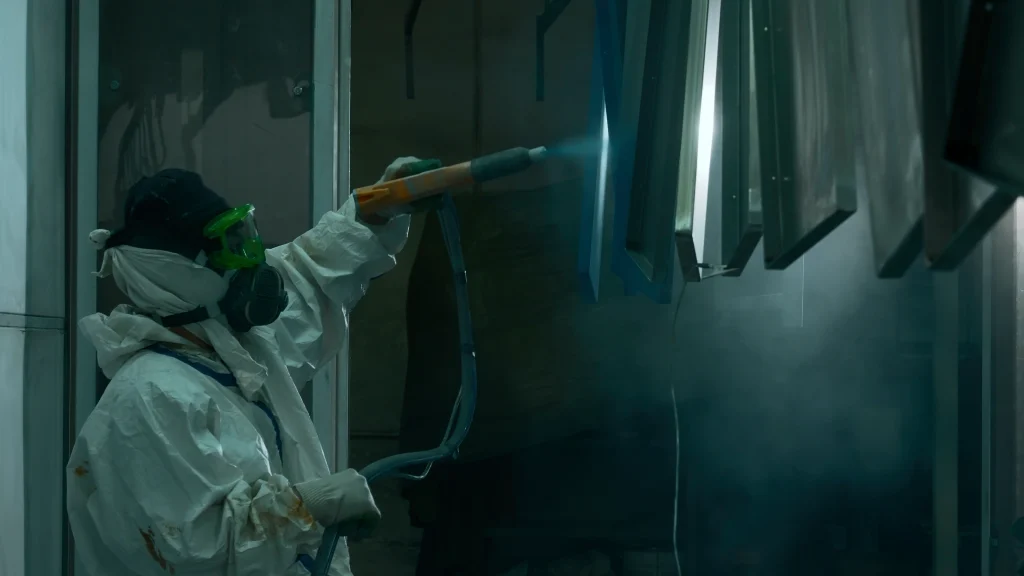
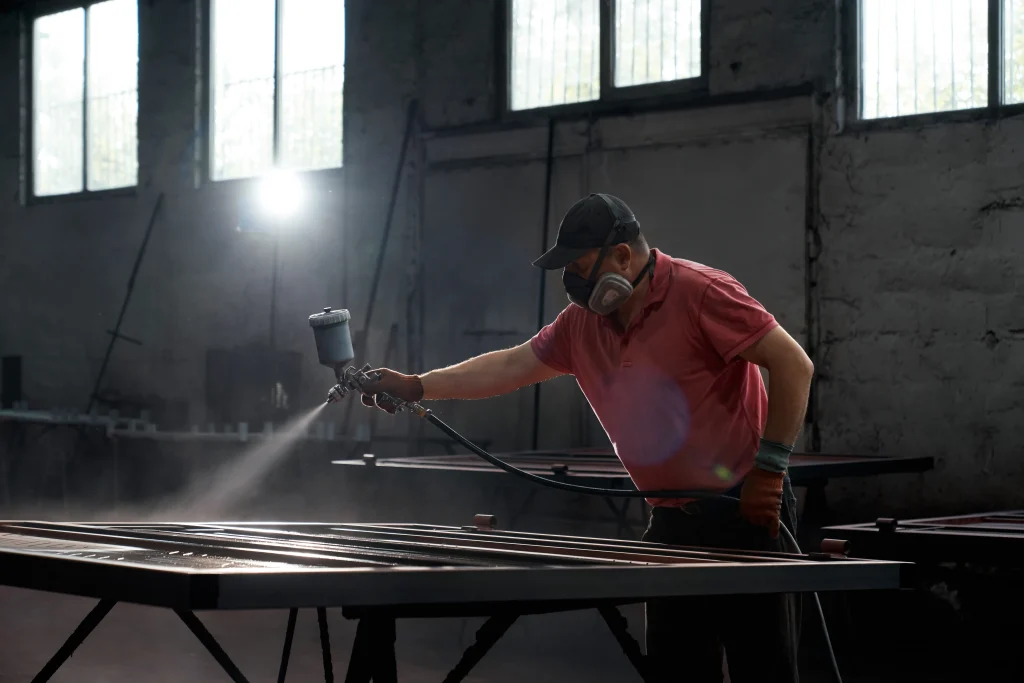
This is where the finishing process becomes just as important as the underlying engineering. A properly applied powder coating finish doesn’t just improve the look of an aluminum ladder — it creates a durable, weather-resistant barrier that protects against corrosion, UV degradation, and surface abrasion.
For companies managing large inventories of ladders across multiple job sites, this translates directly into fewer replacements, fewer failed inspections, and longer service life for every unit in rotation. It’s a small upfront investment that pays off significantly over the working life of the equipment.

Custom Aluminum Ladder Solutions for Commercial and Industrial Applications
Standard ladder models work fine for general use, but many commercial and industrial projects call for something more specific: non-standard heights, reinforced platforms, integrated safety cages, or ladder systems designed to match unique architectural or structural requirements.
This is where custom fabrication becomes essential. Rather than trying to force a generic product into a specialized application, project teams can work with a fabricator to design a ladder system built precisely around the job’s actual demands — whether that’s a rooftop access ladder, a maintenance platform, or a permanent fixture integrated into a larger structure.
Working with a Trusted Fabrication and Coating Partner
Custom fabrication is only half the equation. The finishing process matters just as much as the build itself, which is why working with a partner who handles both fabrication and protective coating under one roof tends to produce better, more consistent results. It also simplifies logistics considerably — instead of coordinating between a fabricator and a separate finishing vendor, contractors can manage the entire process, from design and build through custom fabricated aluminum systems, with a single accountable partner.
This kind of integrated approach is especially valuable when timelines are tight. Contractors juggling multiple project phases need predictable powder coating turnaround times they can plan around, rather than open-ended finishing schedules that put the rest of the project at risk.
It’s also worth noting that ladder systems are rarely the only fall-protection or access component on a commercial site. Many of the same fabrication and finishing principles apply to related structures like balcony guardrail systems, which face similar exposure and safety requirements.
What to Look for When Sourcing Custom Ladder Systems
Before committing to a fabrication partner, it’s worth confirming a few key factors:
- Compliance expertise — Does the fabricator understand current OSHA/ANSI requirements, or are you responsible for verifying compliance yourself?
- Material sourcing transparency — Are you getting certified-grade aluminum, or an unverified substitute?
- In-house finishing capability — Is coating handled internally, or outsourced (which can add time and inconsistency)?
- Project-specific engineering — Can the fabricator accommodate non-standard dimensions or load requirements?
For contractors evaluating multiple vendors, running through a structured sourcing checklist before signing off on a supplier can help avoid costly surprises later in the project.
Environmental and Long-Term Performance Considerations
Beyond safety compliance, there’s a growing focus on the environmental footprint of industrial materials and finishing processes. Powder coating, in particular, produces significantly less volatile organic compound (VOC) emission than traditional liquid finishing methods, making it a more responsible choice for facilities working to meet sustainability goals alongside safety requirements.
For long-term asset management, this combination — regulatory compliance, structural durability, and environmental responsibility — represents the standard that modern industrial ladder systems should be held to, rather than treating these as separate, unrelated priorities.
Frequently Asked Questions
1. What duty rating should a commercial aluminum ladder have?
For most commercial and industrial applications, a Type IA (300 lbs) or Type IAA (375 lbs) duty rating is recommended, ensuring the ladder can safely support the worker’s weight along with tools and equipment.
2. How often should industrial ladders be inspected for compliance?
OSHA guidelines call for ladder inspections before each use, along with more thorough periodic inspections to check for structural wear, corrosion, or damage that could compromise safety.
3. Why choose a custom-fabricated aluminum ladder instead of a standard model?
Custom fabrication allows the ladder to be engineered around specific site requirements — non-standard heights, reinforced platforms, or integrated safety features — that off-the-shelf products typically can’t accommodate.
Conclusion
Industrial aluminum ladders sit at the intersection of regulatory compliance, structural engineering, and long-term durability. Meeting the minimum code requirement is only the starting point — the real difference comes from material quality, precision fabrication, and a finishing process built to withstand years of demanding use.
join our social networks to stay updated with our latest news and events. Don’t miss out on anything and follow our accounts today! Contact us!
For industrial and commercial ladder finishing in the region, Richards Powdercoat LLC provides professional powder coating for ladders in North Carolina — corrosion-resistant finishes for steel and aluminum ladders, applied with full surface pre-treatment.