For commercial contractors and facility managers evaluating finish options, the conversation often starts with durability and cost — but it shouldn’t stop there. Powder coating carries real environmental and safety advantages over traditional liquid paint that directly affect worker safety, site compliance, and long-term building performance. At our shop, we walk clients through these advantages regularly, because they often tip the decision even when two finish options look similar on paper.
This article breaks down why powder coating has become the preferred finish for commercial steel from both an environmental and a safety standpoint, and where it fits into a broader project specification.
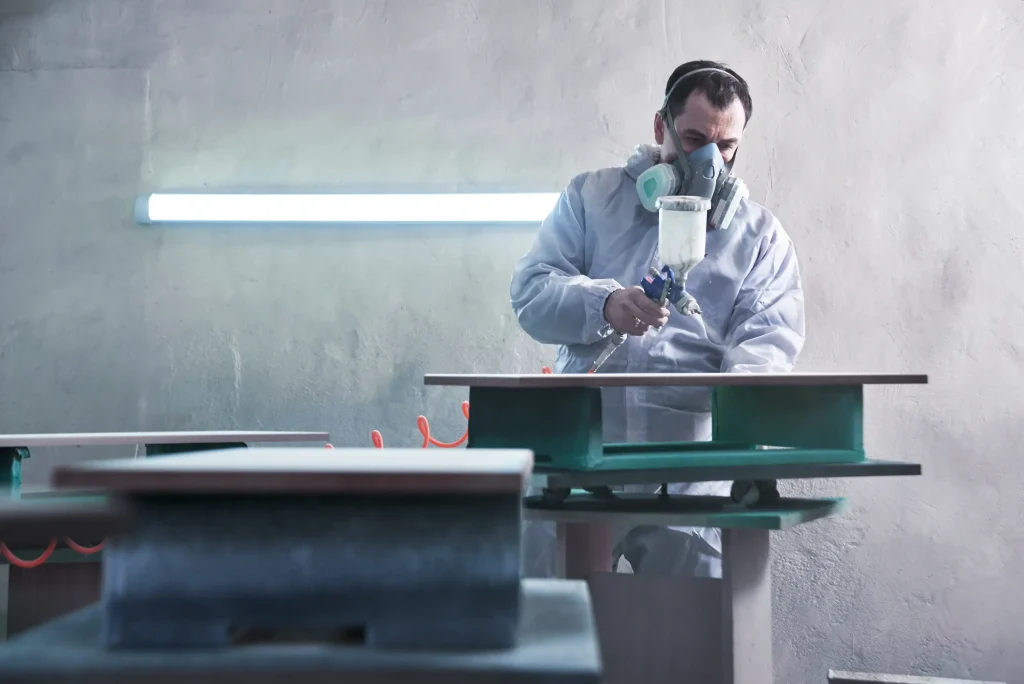
Why Powder Coating Is Considered the Safer Application Process
Unlike liquid paint, powder coating contains no solvents. It’s applied as a dry powder and cured with heat, which eliminates the flash-off period where solvent-based finishes release fumes into the air during application and drying.
Reduced VOC Emissions on the Job Site
Volatile organic compounds (VOCs) are a major concern on any commercial fabrication or finishing site, both for worker exposure and for regulatory compliance. Because powder coating is essentially free of VOCs, facilities avoid the ventilation requirements, exposure monitoring, and emissions permitting that often come with solvent-based coating operations. This matters most on projects where finishing happens on-site rather than in a controlled shop environment.
What This Means for Job Site Safety Protocols
With no solvent fumes to manage, crews working near the finishing area face far less risk of respiratory irritation or exposure-related incidents, and facilities typically need less specialized PPE for the coating process itself compared to solvent-based alternatives.
Waste Reduction and Material Efficiency
Overspray Recovery and Reuse
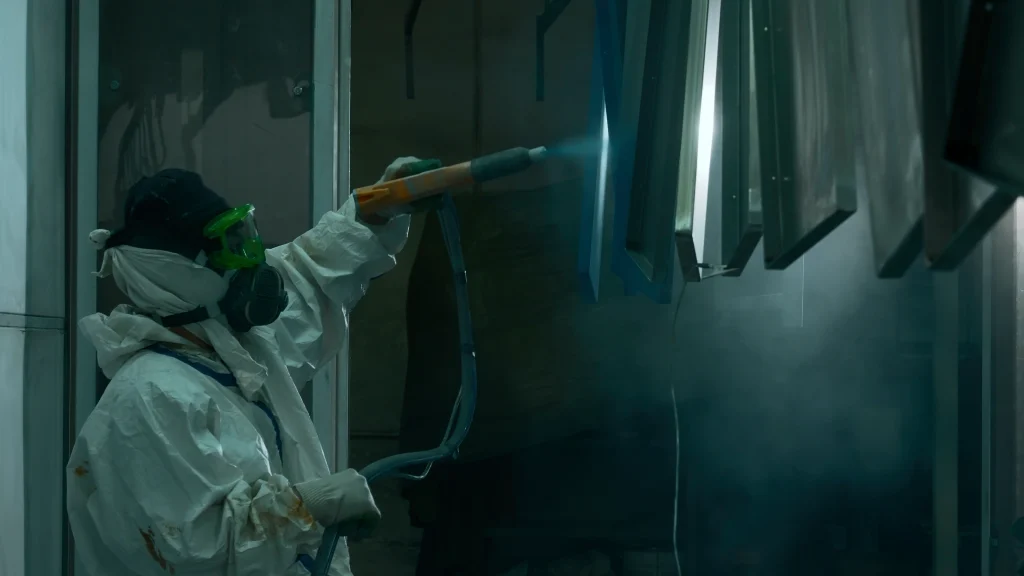
One of powder coating’s most practical environmental advantages is material efficiency. Because the powder is electrostatically applied, oversprayed powder can often be collected and reused in the same batch process, whereas liquid paint overspray is typically lost entirely. This reduces both material waste and the cost of the finish itself, which becomes especially relevant on large commercial runs.
How Coating Thickness Affects Waste and Performance
Getting the coating thickness right isn’t just a durability question — it’s a material efficiency question. Applying more material than the application actually requires wastes powder without adding meaningful performance benefit, while under-application shortens service life and increases the odds of an early recoat. We cover this tradeoff directly when comparing powder coating thickness across different commercial use cases, since the “right” thickness varies significantly by application and exposure class.
Long-Term Environmental Value Through Extended Service Life
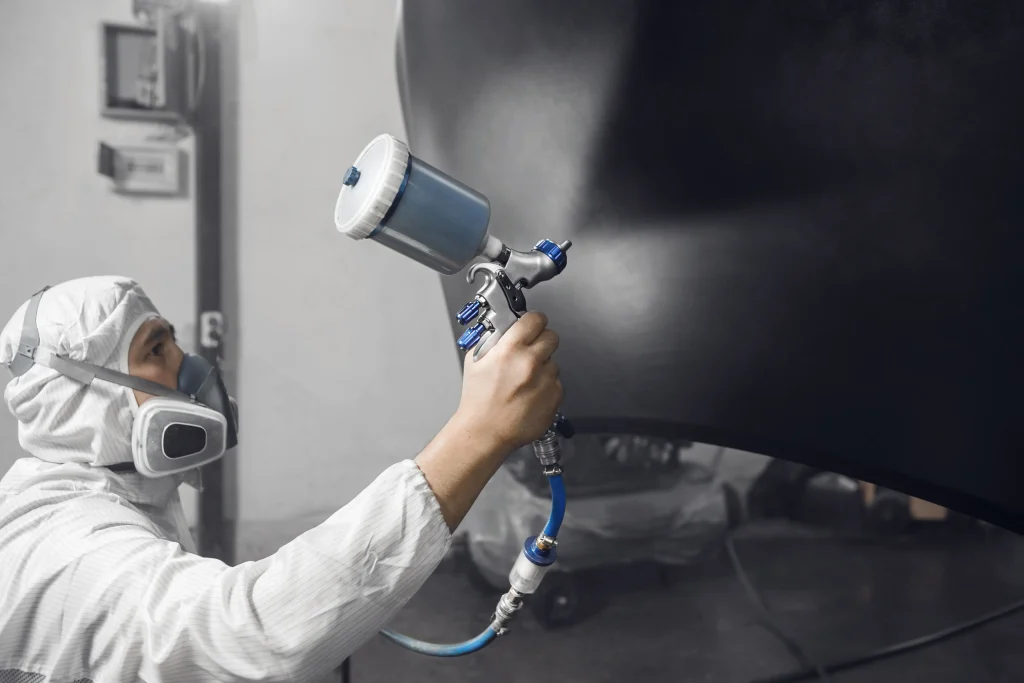
The most overlooked environmental benefit of powder coating isn’t in the application process at all — it’s in what happens after the part is installed. A coating that lasts significantly longer before requiring recoating or replacement reduces the cumulative environmental footprint of the component over its lifetime, from raw material extraction to disposal.
Lifespan Extension as an Environmental and Safety Strategy
Steel components exposed to weather, corrosion, and mechanical wear degrade faster without adequate protection, eventually requiring structural repair or replacement — both of which carry their own environmental and safety costs. Properly specified powder coating slows this degradation substantially, which is exactly why we cover how powder coating extends the lifespan of commercial steel components as a core part of any long-term facility maintenance plan.
Corrosion Resistance in High-Exposure Environments
Corroding steel isn’t just a maintenance headache — in structural applications, it’s a genuine safety concern. Components exposed to coastal air, road salt, or industrial chemicals face accelerated corrosion without the right protective coating. The value of specifying the correct coating system for these conditions is significant enough that we’ve dedicated a full breakdown to the ROI of using aluminum in high-corrosion environments, much of which applies equally to coated steel assemblies facing the same exposure.
Where Safety-Critical Applications Make Powder Coating the Clear Choice
Multi-Family and Structural Railing Applications
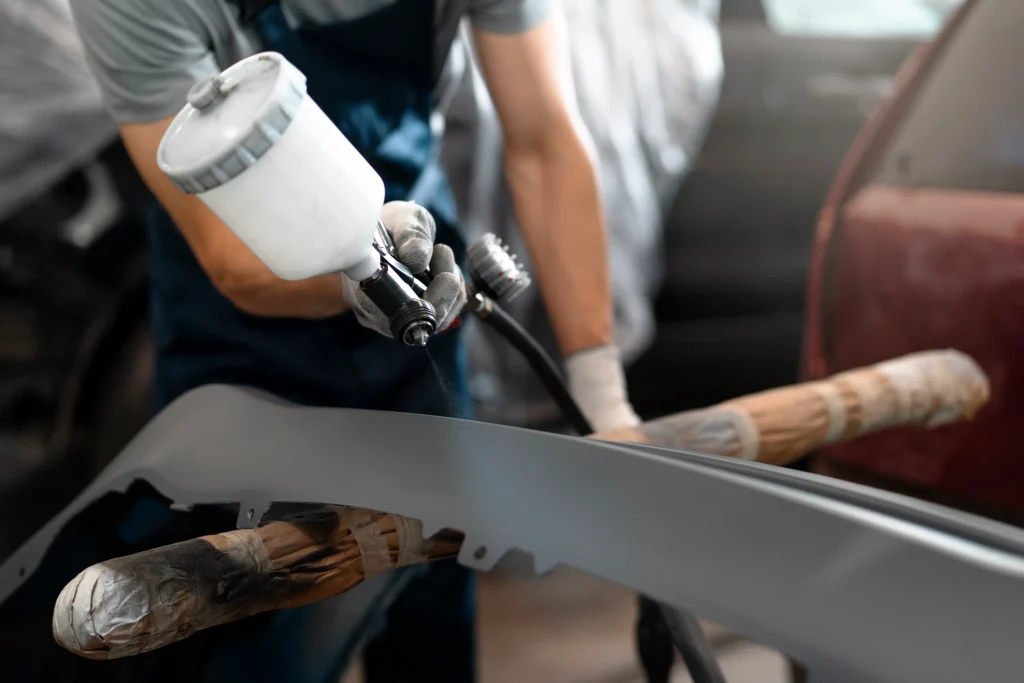
Few applications combine environmental exposure and life-safety stakes quite like balcony and railing systems on multi-family housing. These components are subject to constant weathering and, in the event of coating failure, present a genuine structural risk. That’s why regulatory frameworks around these systems are so specific — a topic we cover in our guide to multi-family housing balcony regulations, which outlines how coating durability directly ties into compliance requirements.
Balancing Safety Requirements With Project Budget
Safety-driven specifications don’t have to come at an unreasonable cost premium, but project teams do need to understand what actually drives pricing on commercial steel finishing. Prep work, coating thickness, part complexity, and batch size all factor in — details we unpack in cost factors in commercial steel powder coating, so that safety and budget decisions can be made together rather than as competing priorities.
Frequently Asked Questions
Is powder coating actually better for the environment than liquid paint?
Yes, in several measurable ways. Powder coating produces little to no VOC emissions, generates less waste through overspray recovery, and typically extends component lifespan, all of which reduce the overall environmental footprint compared to conventional liquid paint systems.
Does powder coating eliminate the need for special safety precautions during application?
It significantly reduces solvent-related risks, but the curing process still involves high heat and electrostatic equipment that require proper handling. Facilities still need standard safety protocols around the curing ovens and application equipment, even without solvent exposure concerns.
How does powder coating improve safety in structural applications like railings?
By resisting corrosion and mechanical wear more effectively than untreated or poorly coated steel, powder coating helps structural components maintain their load-bearing integrity over time, which directly reduces the risk of failure in safety-critical applications like balcony railings and stair systems.
Conclusion
Powder coating’s environmental and safety advantages go well beyond a “greener” application process. From reduced VOC exposure on the job site to extended component lifespan and stronger corrosion resistance in demanding environments, the case for powder coating steel is as much about safety and long-term value as it is about appearance.
join our social networks to stay updated with our latest news and events. Don’t miss out on anything and follow our accounts today! Contact us!